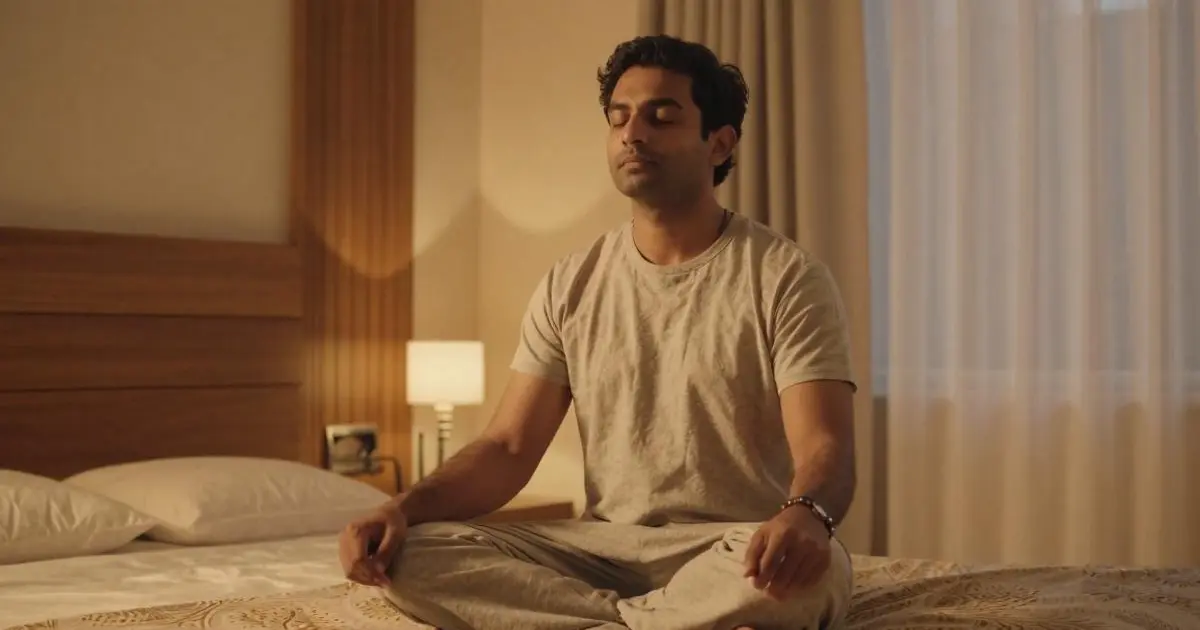
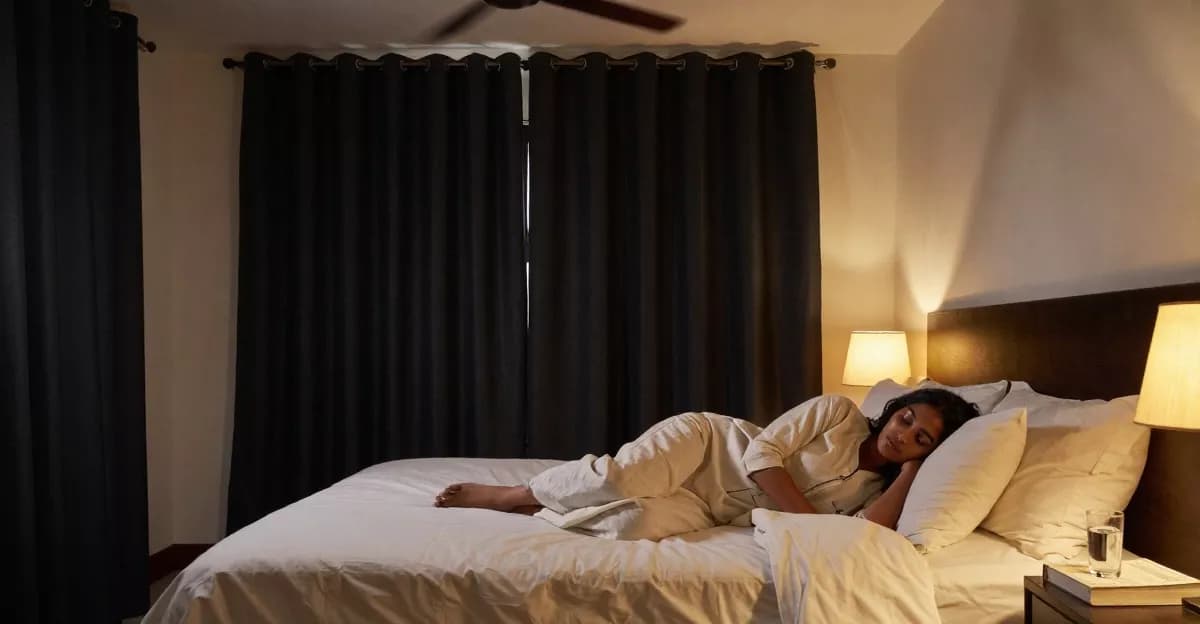
You have probably heard the advice before. Go to bed at the same time every night. Don't use your phone in bed. Cut back on coffee. Keep your bedroom dark. It sounds simple to the point of being obvious - and yet the vast majority of people who know these guidelines do not consistently follow them, and a significant proportion are sleeping badly enough to measurably impair their health, cognitive function, and emotional wellbeing every single day.
The reason is not ignorance. It is that sleep hygiene advice is typically delivered as a list of rules without the biology that makes those rules make sense. When you understand why a cool bedroom improves sleep, why a consistent wake time matters more than bedtime, and why your phone is a more disruptive presence in your bedroom than you likely realize - the advice stops feeling arbitrary and starts feeling urgent. You stop managing sleep hygiene like a chore and start treating it like the biological investment it actually is.
This guide gives you the why. The what follows naturally.
Why Sleep Hygiene Is Not Optional
Before the practical framework, a brief reckoning with what is actually at stake.
According to a comprehensive 2026 expert review published in PMC (National Library of Medicine), sleep is increasingly recognized as a foundational pillar of health comparable to nutrition and physical activity - with poor sleep quality independently linked to increased risk of cardiovascular disease, type 2 diabetes, obesity, depression, anxiety, impaired immune function, and accelerated cognitive aging. This is not an exaggeration for effect. It is the current scientific consensus, arrived at through decades of epidemiological, experimental, and clinical research across millions of participants globally.
The WHO estimates that two-thirds of adults in developed nations fail to achieve the recommended 8 hours of sleep per night. In India, surveys consistently show that urban adults average 6 hours or fewer on weeknights - nearly 20% below the physiological minimum for most adults. The consequences of this chronic deficit are invisible in the short term and catastrophic in the long term: each night of insufficient sleep is a withdrawal from a biological account whose balance sheet only becomes legible years later, in the form of disease, dysfunction, and diminished capacity.
Sleep hygiene - the set of environmental and behavioral conditions that enable the brain's sleep systems to function as designed - is the most accessible, most evidence-based, zero-cost intervention available for this crisis. It is not a wellness luxury. It is foundational maintenance.
Deep Dive
To dive deeper into this topic, read our comprehensive guide: The Ultimate Sleep Guide: Optimizing Sleep Hygiene & Circadian Rhythm
The Sleep Environment: Designing Your Bedroom for Biology
Most people's bedrooms are architecturally designed for living - for comfort, aesthetics, and the full range of modern digital activity. Very few are designed for sleep. The gap between a functional bedroom and an optimized sleep sanctuary is smaller than most people think - and the improvements it produces are measurably significant.
Temperature: The Most Critical Variable
Core body temperature must drop by 1-3°F (0.5-1.5°C) to initiate and sustain sleep. This is not a preference - it is a physiological requirement. Your bedroom environment either facilitates or impedes this drop, and the consequences of getting it wrong are direct and measurable.
A landmark longitudinal study published in PMC examining nighttime ambient temperature and sleep quality across community-dwelling adults found that sleep was most efficient and restful when bedroom temperature ranged between 20-25°C - and that an 8°C increase in ambient temperature (from 22°C to 30°C) was associated with a 10% drop in sleep efficiency. As Psychology Today's analysis of temperature and sleep quality notes, even mild increases in bedroom temperature above the optimal range reduce deep sleep duration and increase the frequency of nighttime awakening - two of the most damaging sleep disruptions.
Practical temperature optimization for Indian conditions:
- Target bedroom temperature of 20-23°C - achievable with ceiling fan on low and light cotton bedding through most of the year
- During Indian summers: AC set to 22-24°C if available; a ceiling fan directly overhead plus a light cotton bedsheet creates a functional approximation
- Warm bath or shower 60-90 minutes before bed paradoxically improves sleep - hot water draws blood to the skin surface, accelerating core temperature drop upon exiting the bath and signaling the brain that sleep time is approaching
- Avoid thick synthetic blankets - they trap heat and prevent the core temperature drop
Darkness: The Melatonin Signal
The bedroom should be dark enough that you cannot see your hand in front of your face. This is not an aesthetic preference - it is a direct melatonin protection measure.
A major study published in JAMA Network Open and reported by NDTV Health found that night light exposure was a significant risk factor for developing cardiovascular disease in adults over 40 - and that reducing bedroom light at night could be a simple, low-cost prevention strategy. Professor Frank Scheer of Harvard's Brigham and Women's Hospital, a co-author of the study, stated plainly: "There's really no downside to keeping the bedroom dark. A very dim light for safety is fine, but bright light has no benefit during sleep".
Darkness checklist:
- Blackout curtains - the single highest-return investment in sleep environment quality
- Cover or remove all LED standby lights from electronics (TV, router, charger indicator lights - individually small, collectively significant)
- Eye mask as an affordable, portable alternative to blackout curtains
- If a nightlight is necessary for safety: use red wavelength light only - red light does not suppress melatonin
Sound: Managing the Acoustic Environment
Complete silence is not necessarily optimal - sudden, unpredictable sounds are far more disruptive than consistent background noise. The mechanism is the orienting response: the brain is programmed to alert on unexpected sound changes (a survival mechanism), but habituates to predictable steady-state noise.
Pink noise and brown noise - lower frequency than white noise, with a richer, more natural sound profile - have the strongest sleep research support: shown to increase slow-wave sleep percentage and improve memory consolidation scores in multiple studies. Practical sources: a ceiling fan, an air purifier on low setting, or a free app generating pink or brown noise.
Behavioral Sleep Hygiene: The Habits That Matter Most
The Fixed Wake Time: The Most Important Habit
If you implement only one sleep hygiene change, make it this one: set a fixed wake time and hold it every single day - including weekends.
The circadian rhythm is anchored by wake time, not bedtime. A consistent wake time - maintained regardless of when you fell asleep or how poor the previous night was - stabilizes the entire circadian system, builds appropriate sleep pressure for the following night, and reduces the chronic social jetlag that is one of the most common causes of persistent sleep difficulty. Varying your wake time by 90+ minutes between weekdays and weekends - a pattern that describes most working adults - is equivalent to crossing multiple time zones every single week.
Set the alarm. Get up. The consistency compounds. Within 2 weeks of a fixed wake time, most people report measurably improved sleep onset speed and morning alertness - even before implementing any other change.
Caffeine: The Half-Life Problem Most People Ignore
Caffeine has a half-life of 5-7 hours in most adults - meaning a 3 PM coffee still has 50% of its stimulant effect circulating at 9 PM, and 25% remaining at midnight. Its mechanism - blocking adenosine receptors, the molecule that builds sleep pressure throughout the day - means that afternoon caffeine is not just a stimulant. It is a direct sleep pressure suppressor that reduces the biological drive to sleep at your target bedtime.
The evidence-based cutoff: no caffeine after 1-2 PM for most adults. For caffeine-sensitive individuals, noon. For those with slow caffeine metabolism (often genetic), even morning coffee can affect sleep onset. If your sleep is genuinely poor, eliminating all caffeine for two weeks and observing the effect is one of the most diagnostically useful experiments you can run on your own biology.
The Pre-Sleep Wind-Down: 90 Minutes That Change Everything

The brain does not transition from full alertness to sleep readiness instantaneously. It requires a neurological decompression period - a transition from sympathetic (alert, reactive) to parasympathetic (calm, restorative) nervous system dominance. The 90 minutes before your target sleep time are the highest-leverage window in your entire sleep hygiene practice.
The 90-minute wind-down sequence:
T-90 minutes: Dim all lights in your home to 50% or below. Close work applications. No email, news, or emotionally engaging content. The nervous system cannot be simultaneously processing threat/stress/stimulation and transitioning toward sleep.
T-60 minutes: Warm shower or bath (triggers the peripheral vasodilation that accelerates core temperature drop). Change into sleep-dedicated clothing - a simple behavioral cue that the brain learns to associate with sleep mode over time.
T-45 minutes: Cognitive offload - write tomorrow's task list in a physical journal. This externalization of pending concerns transfers active mental processing from your working memory to paper, directly reducing the rumination that keeps the prefrontal cortex active at bedtime. A 2017 study at Baylor University found that writing a to-do list before sleep significantly reduced the time to fall asleep - more effectively than writing about completed tasks.
T-30 minutes: Light reading from a physical book (not a screen), gentle stretching, or herbal tea - chamomile, ashwagandha, or lemon balm (see our Herbal Teas article for evidence-based options).
T-15 minutes: Progressive muscle relaxation, slow breathing, or Yoga Nidra in bed. Phone in another room or on airplane mode.
The Bed-Sleep Association: Stimulus Control
Your brain forms powerful associations between environments and behavioral states. If your bed has become associated with scrolling, working, watching content, worrying, or lying awake for hours - it has lost its primary association with sleep. When you get into bed, the brain's learned response is not drowsiness but the activity it most commonly performs there.
Stimulus control re-establishes the bed-sleep connection:
- Use your bed for sleep and intimacy only. No screens, no reading (in the initial re-conditioning phase), no work.
- If you are awake in bed for more than 20 minutes: get up, go to a different, dimly lit room, do something calm (read a physical book, practice breathing) until genuinely sleepy, then return.
- This feels counterproductive - leaving a comfortable bed when you want to sleep - but it is the fastest known method for restoring the bed-sleepiness association. The discomfort of getting up trains the brain to initiate sleep when horizontal rather than practicing wakefulness there.
Nutrition, Exercise, and Lifestyle Factors
Exercise timing is one of the most consequential and most overlooked sleep hygiene variables. Regular aerobic exercise consistently improves sleep quality, sleep onset speed, and deep sleep percentage - but vigorous exercise within 3 hours of bedtime raises core body temperature and cortisol, delaying sleep onset by an average of 45 minutes in research studies. Morning and afternoon exercise: excellent for sleep. Late evening intense training: physiologically incompatible with rapid sleep onset for most people.
Alcohol deserves explicit attention because its relationship with sleep is among the most widely misunderstood in wellness. Alcohol is a sedative, not a sleep aid. It accelerates sleep onset - which is why it feels like it helps - but then dramatically fragments the second half of the night, suppresses REM sleep, and increases nighttime awakening frequency. Even one drink measurably reduces sleep quality by 9-11% in research studies. The perception of better sleep after alcohol is the sedative wearing off revealing the disrupted sleep beneath.
Dinner timing matters more than most people appreciate. Eating within 1-2 hours of bedtime activates digestive and metabolic processes that compete directly with the body's transition into restorative mode - raising core body temperature (the opposite of what sleep requires) and elevating insulin at a time when the circadian system expects metabolic quiescence. A 2020 study found late eating was associated with significantly reduced slow-wave sleep and increased nighttime awakening. Aim for dinner at least 3 hours before your target sleep time.
When Sleep Hygiene Alone Is Not Enough?
It is important to be honest about the limits of sleep hygiene as a standalone intervention. According to a 2025 meta-analysis published in the ScienceDirect review of sleep hygiene education for insomnia, sleep hygiene education produces significant improvements in sleep measures - but is consistently less effective than Cognitive Behavioral Therapy for Insomnia (CBT-I) for those with established chronic insomnia. CBT-I - the gold standard treatment combining sleep restriction, stimulus control, cognitive restructuring, and relaxation training - remains the most effective non-pharmacological intervention for persistent sleep disorders.
If your sleep difficulty persists beyond 4-6 weeks of consistent sleep hygiene implementation, or significantly impairs daily functioning, professional evaluation is warranted. The Global Wellness Institute's 2025 Sleep Initiative report notes that AI-powered CBT-I platforms are increasingly accessible for those who cannot access in-person sleep specialists - with evidence-based digital programs now available that produce outcomes comparable to therapist-delivered treatment.
The Compounding Return of Consistent Sleep
Sleep hygiene is not a collection of rules to follow on good nights. It is a daily investment in the biological systems that govern your physical health, cognitive capacity, emotional regulation, immune function, and long-term disease risk. The returns on that investment compound - each well-slept night builds the neurological and physiological foundation for the next.
Start with the two highest-leverage changes: a fixed wake time, and dimming your home's lights 90 minutes before bed. Let the consistency build for two weeks before evaluating results. The improvement, when it comes - and it will - will not feel like a health intervention. It will feel like remembering what it means to be genuinely rested.