It is 10:47 PM. You are lying in bed, phone in hand, doing what most people do at 10:47 PM - scrolling. Maybe it is news, maybe Instagram, maybe a YouTube rabbit hole that started with a cooking video and somehow ended at a documentary about deep sea fish. You are not particularly stressed. You are not drinking coffee. You are doing what feels like unwinding.
But inside your skull, something very different is happening. The light from that screen - specifically the short-wavelength, high-energy blue light in the 460-480 nanometre range - is traveling through your retina to a cluster of approximately 20,000 neurons in your hypothalamus called the suprachiasmatic nucleus (SCN). And it is telling those neurons, with the full force of photobiological certainty, that it is midday.
Your pineal gland responds accordingly. It stops producing melatonin.
This is not a metaphor. It is not a mild inconvenience. It is the biological mechanism by which the screens in our lives are quietly and systematically dismantling one of the most ancient and fundamental rhythms of human physiology - and the health consequences, as research continues to accumulate, are considerably more serious than simply feeling tired the next morning.
The Circadian Clock: A 200,000-Year-Old System Meeting a 30-Year-Old Problem
The circadian rhythm is your body's internal 24-hour biological clock - a master timing system that governs not just sleep and wakefulness, but every major physiological process: hormone secretion, immune activity, metabolism, cell division, body temperature, and cognitive performance. It evolved over hundreds of thousands of years in a world with a single, predictable light source - the sun - that rose and set at consistent, seasonally adjusted times.
The SCN - the tiny brain region that serves as the master circadian clock - receives direct light input from specialized retinal ganglion cells containing a photopigment called melanopsin. Melanopsin is exquisitely sensitive to blue wavelength light (460-480nm) - the same wavelength that is maximally present in midday sunlight, and the same wavelength that dominates the emission spectrum of LED screens, smartphones, tablets, and energy-efficient lighting. When melanopsin detects blue light, it signals the SCN to suppress melatonin and activate cortisol - the hormonal signature of daytime.
For 200,000 years, this system worked flawlessly. After sunset, light disappeared. Blue wavelengths vanished from the environment. Melatonin rose. Sleep followed naturally.
Then, in the span of roughly three decades, we introduced screens into the bedroom - and into the hours between sunset and sleep - at a scale unprecedented in human history. The SCN has no evolutionary response to this. It simply does what it was designed to do: respond to blue light as a signal that the sun is up, regardless of what the clock on the wall says.
Deep Dive
To dive deeper into this topic, read our comprehensive guide: The Ultimate Sleep Guide: Optimizing Sleep Hygiene & Circadian Rhythm
What Melatonin Actually Does - and What Happens When It Is Suppressed

Melatonin is widely understood as "the sleep hormone," but this framing undersells its systemic importance. Melatonin is a master circadian signal - a chemical broadcast from the pineal gland to every cell in the body that announces: night has arrived, shift into restoration mode. It does not cause sedation directly. It creates the physiological conditions in which the brain's sleep systems can function as designed.
When melatonin is suppressed - by blue light exposure in the hours before bed - the consequences cascade through multiple systems simultaneously:
Sleep architecture is disrupted. According to research summarized by Dr. Matthew Walker at the Matthew Walker Sleep Center, reading on a light-emitting device rather than a physical book reduces melatonin production by as much as 20% and measurably reduces REM sleep - the stage most critical for emotional regulation and memory consolidation. This is not a subjective impression. It is a measurable physiological impairment.
Sleep onset is delayed. A landmark study from Brigham and Women's Hospital found that evening blue light exposure suppresses melatonin for up to 3 hours and delays its onset - pushing sleep timing later even when a person is genuinely tired. This delay compounds across nights, creating a chronic sleep deficit that accumulates far faster than most people recognize.
Health risks extend well beyond tiredness. The Spectra Sol research review documents the downstream health associations of chronic blue-light-driven sleep disruption: increased risk of obesity, type 2 diabetes, cardiovascular disease, and dementia - conditions that share chronic sleep disruption and circadian misalignment as common upstream drivers. Melatonin also functions as a powerful antioxidant and has oncostatic (cancer-inhibiting) properties - meaning its chronic suppression by artificial light has implications that go far beyond the bedroom.
The Indian Context: A Particularly Acute Problem
India's screen time problem is significant and growing. A 2025 report on India's Screen-Time and Eye-Protection patterns found that 58.8% of Indian users reported better sleep on days with less screen time - yet behavioral change remained limited by practical inertia and insufficient awareness of the mechanisms involved. Urban Indians face a particularly compounded challenge: late dinner culture, evening social media use, and the prevalence of bright LED lighting in homes create multiple simultaneous blue-light exposures in the critical 2-3 hour window before sleep.
The combination of late work hours, evening screen use, and India's naturally later social timing creates what researchers call social jetlag - a chronic mismatch between biological sleep timing and actual sleep behavior that is now associated with measurably increased metabolic and cardiovascular risk.
The Nuance: Is Blue Light Alone the Whole Story?
The science here has become somewhat more nuanced in the last few years, and intellectual honesty requires acknowledging it.
A 2024 review in Sleep Medicine suggested that the sleep-delaying effect of blue light specifically - as distinct from light brightness generally - may have been somewhat overstated in early research. Some researchers now argue that brightness and psychological arousal from screen content may be equally or more significant contributors to sleep disruption than blue wavelengths alone.
This does not mean blue light is not a problem - it means the problem is broader than blue light. The full picture involves:
- Brightness: Any bright light - regardless of color temperature - suppresses melatonin. Dimming screens has significant independent benefits beyond filtering blue wavelengths.
- Content arousal: Social media, news, and emotionally engaging content activate the sympathetic nervous system - creating psychological arousal that is incompatible with sleep initiation regardless of light color.
- Timing: The same light exposure that is beneficial in the morning is harmful at night - the identical blue wavelengths that set your circadian clock in the morning disrupt it in the evening.
- Duration: Chronic, nightly, multi-hour exposure has cumulative effects that single-night studies may underestimate.
The practical implication: treating this as only a blue light filtering problem - wearing blue light glasses while continuing to scroll at maximum brightness until midnight - addresses a fraction of the actual disruption. The more effective approach addresses brightness, content arousal, and timing simultaneously.
The Protection Protocol: What Actually Works
1. The Electronic Sunset - The Highest-Leverage Intervention
The single most effective strategy is the simplest and the least followed: stop using screens 60-90 minutes before your target sleep time. This is not a blue light filtering strategy. It is a complete cessation of the light signal that is confusing your SCN, combined with removal of the content arousal that keeps your sympathetic nervous system activated.
This feels genuinely difficult - and that difficulty is itself diagnostic. The compulsive pull to check the phone one more time, to watch one more episode, to scroll a little longer, is partly behavioral and partly neurological: dopamine-driven content loops are specifically engineered to override the brain's readiness for sleep. Recognizing this as a designed feature - not a personal failing - makes it easier to set a deliberate boundary against it.
2. Lighting Transitions: The 3-2-1 Protocol
In the absence of complete screen cessation, a graded lighting transition significantly reduces blue light exposure in the pre-sleep hours:
- 3 hours before bed: Reduce overhead lighting by 50%. Switch LED bulbs to warm color temperature settings (2700K or lower).
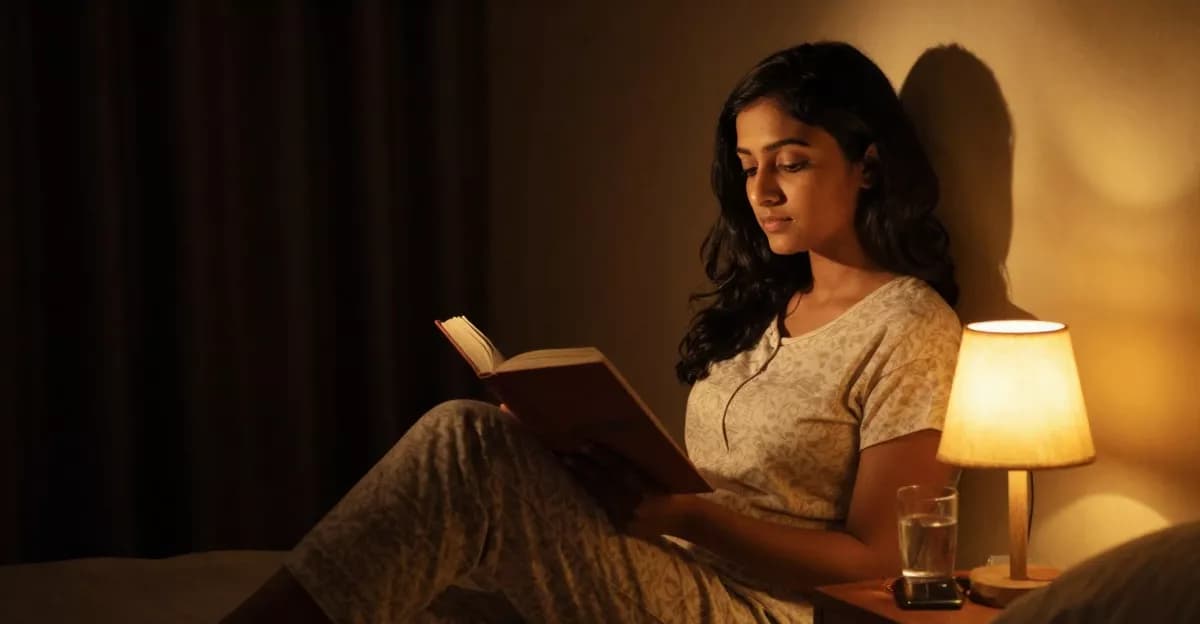
- 2 hours before bed: Move to low, warm-toned floor lamps or table lamps only. Dim screen brightness to the lowest comfortable setting and enable night mode (warm color filter).
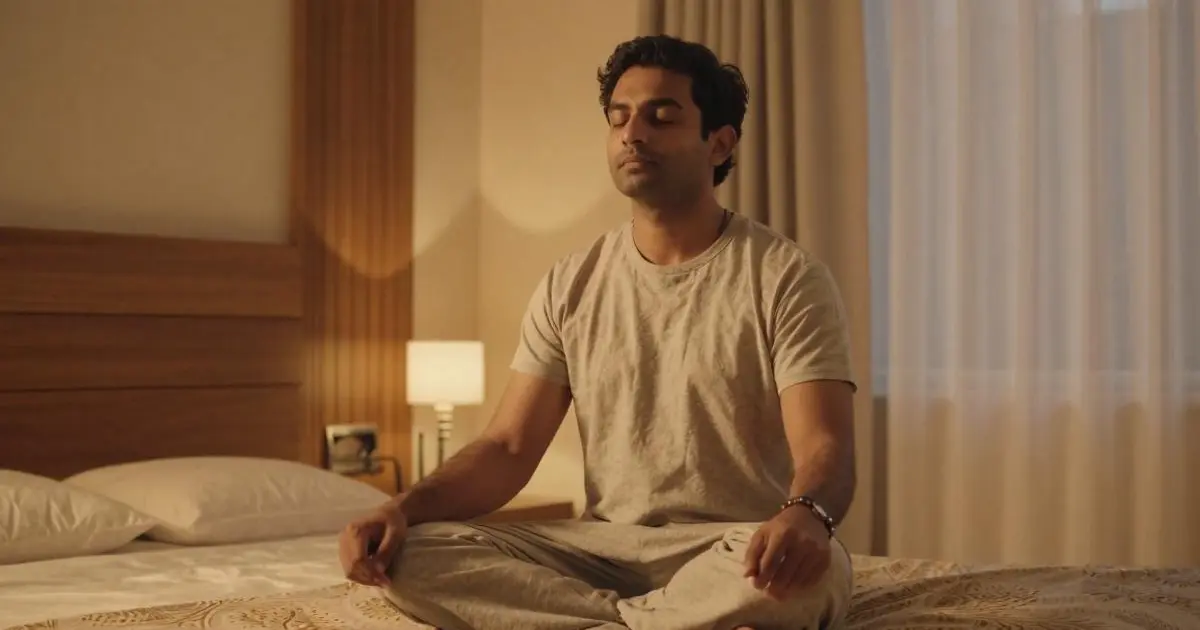
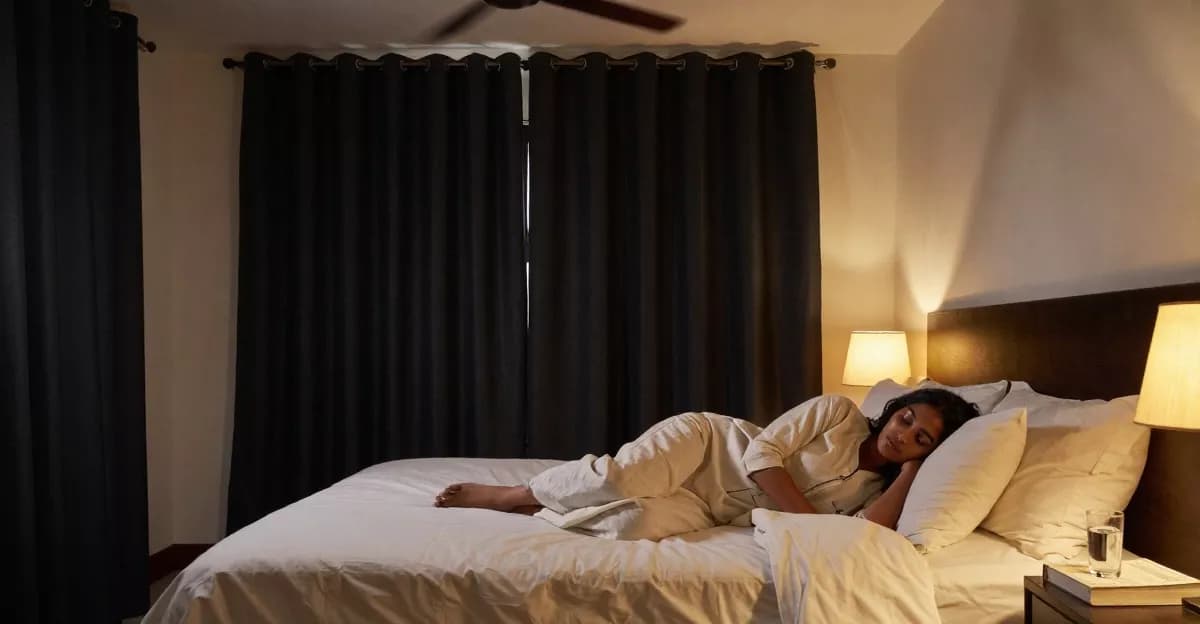
- 1 hour before bed: Screens off entirely. Candles, a dim bedside lamp, or complete darkness.
The Harvard Division of Sleep Medicine's guidance on light and sleep confirms that reducing light intensity in the 2-3 hours before bed is among the most evidence-supported sleep hygiene interventions available - independent of the blue-light-specific debate.
3. Morning Light: The Counterintuitive Solution
One of the most powerful ways to protect your evening sleep from blue light is to ensure robust morning light exposure. This sounds counterintuitive - but the mechanism is straightforward.
Morning sunlight exposure - 10 minutes outdoors within 30 minutes of waking - sets the precise timing of your melatonin onset approximately 12-14 hours later. A robustly anchored circadian clock is more resistant to evening light disruption than a weakly entrained one. As Dr. Andrew Huberman's research at Stanford consistently demonstrates, morning sunlight is the master lever of the entire circadian system - and neglecting it while trying to fix evening screen habits is addressing the problem from the wrong direction.
4. Blue Light Glasses: A Partial Tool, Not a Solution
Blue light filtering glasses reduce the blue wavelength component of screen light - but do not address brightness, content arousal, or the behavioral compulsion to use screens. A 2021 Cochrane review found insufficient evidence that blue light glasses meaningfully improve sleep in isolation. They are a partial mitigation tool, not a replacement for reducing screen use itself.
If you use them: wear glasses with orange or amber lenses (not clear "blue light" lenses, which filter minimally) in the 2 hours before bed - these filter the full blue-green spectrum more effectively and have the strongest evidence for melatonin protection.
5. Display Settings That Genuinely Help
- Enable Night Shift (iOS) or Night Mode (Android) - these shift screen color temperature toward warm amber tones in the evening. Set to activate automatically at sunset.
- Reduce screen brightness as a priority alongside color temperature - dimness matters as much as warmth.
- Enable dark mode across all apps - reduces the overall luminance output of the screen, particularly in dark environments where the contrast between screen and room is highest.
- Consider f.lux software on computers - it automatically warms display color temperature after sunset based on your geographic location.
The Deeper Issue: Reclaiming the Night
There is a version of this problem that blue light glasses and night mode cannot solve - and it is worth naming directly.
The hours between 9 PM and midnight have been, for most of human history, the natural transition time between the active world and the restorative darkness. They were hours of winding down - conversation, reading by firelight, quiet reflection. The circadian rhythm evolved to use this window for a gradual physiological downshift. The modern smartphone has turned these hours into a second peak of stimulation, social engagement, information consumption, and emotional arousal - precisely when the biology requires the opposite.
The light is one part of the problem. The compulsive overscheduling of the nervous system during the hours that should belong to rest is the other.
According to the National Sleep Foundation's guidelines on screen use and sleep health, adults who use electronic devices in bed are significantly more likely to report insufficient sleep, higher daytime sleepiness, and lower overall sleep quality - even when controlling for blue light exposure specifically. The screen is not just a light source. It is a stimulation delivery system that the bedroom was never designed to contain.
Protecting your sleep from blue light ultimately means more than installing a filter. It means rebuilding a relationship with the evening hours - one in which the last hour before sleep belongs to your nervous system, not your notifications.