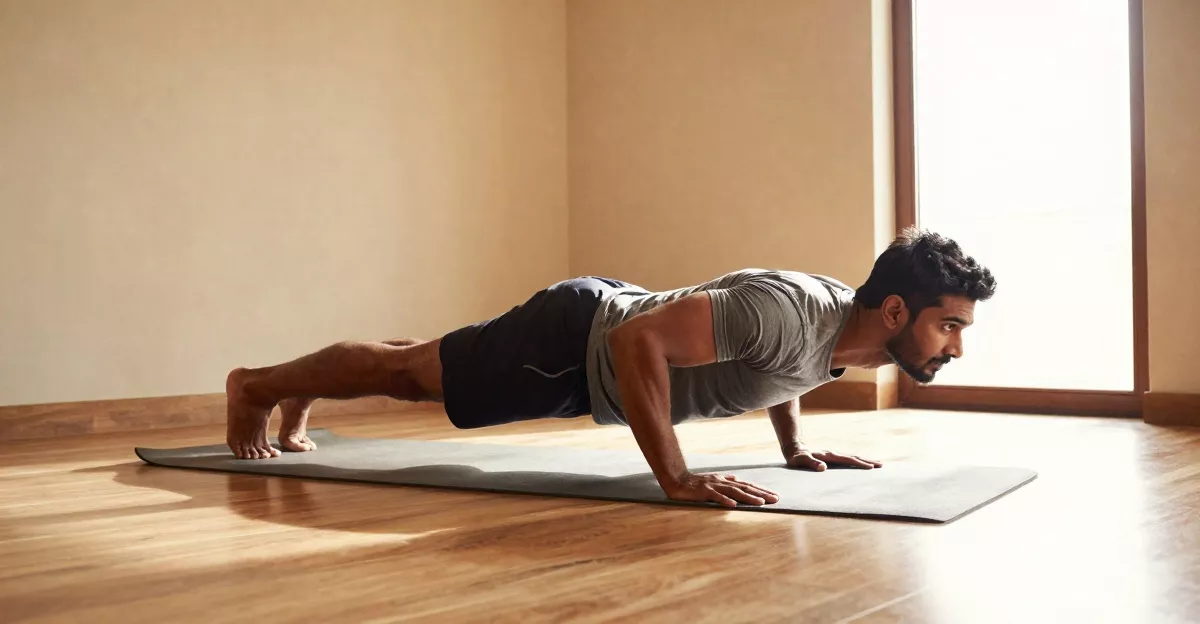
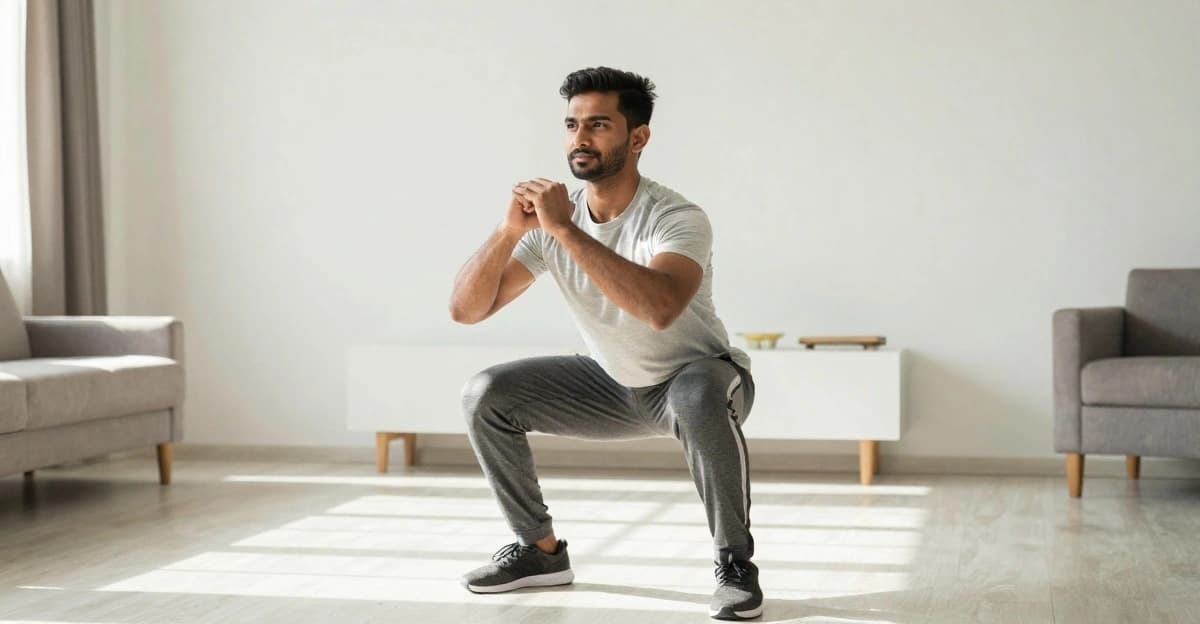
Breaking the Fitness Myth: Why Most Plans Fail Beginners
Most people don't quit fitness because they're lazy. They quit because nobody gave them a realistic, human starting point. They were handed a professional athlete's training plan, a bodybuilder's diet, and a timeline measured in weeks - then told to be consistent. That's not a fitness plan. That's a recipe for burnout.
This guide is different. It's built specifically for the person who is starting from zero, returning after a long break, or simply tired of programs that don't account for real life. The science is here. The steps are here. And most importantly - the permission to start small and build steadily is here too.
Deep Dive
To dive deeper into this topic, read our comprehensive guide: 10-Minute Dumbbell HIIT Circuits: Compact Home Gym Trend for 2026
1. Rethinking Fitness: Why Most Beginners Quit (And How You Won't)
Before a single squat or push-up, the most important fitness work happens in your mind.
The Real Reason Fitness Feels Overwhelming
Walk into any gym or open any fitness app and you're immediately confronted with advanced programming, complex terminology, and physiques that represent years - sometimes decades - of dedicated training. For a beginner, this is paralyzing.
The fitness industry has a structural problem: it profits more from selling transformation fantasies than from teaching sustainable fundamentals. A 2021 study published in Health Psychology found that over 50% of people who begin a new exercise program quit within the first 6 months - and the primary driver isn't physical inability. It's psychological overwhelm and unmet expectations.
The two most common beginner traps:
- Information overload: Conflicting advice about cardio vs. weights, morning vs. evening workouts, keto vs. carb-cycling - all before you've done your first workout
- All-or-nothing thinking: "If I can't train 5 days a week, there's no point." This cognitive distortion is the single biggest predictor of fitness dropout
What Fitness Actually Means for a Beginner
Fitness is not a destination that looks like a six-pack. For a beginner, fitness means building four foundational capacities:
- Muscular strength: The ability to exert force against resistance
- Cardiovascular endurance: The efficiency of your heart and lungs during sustained activity
- Flexibility and mobility: The range and quality of movement your joints allow
- Body composition: The ratio of lean mass to fat mass - which improves naturally as the other three improve
At the beginner stage, your only goal is to show up consistently. Everything else is secondary.
The Science of Habit Formation in Fitness
Stanford behavioral scientist BJ Fogg's Tiny Habits model offers the most practical framework for building a lasting exercise habit: make the behavior so small it cannot be refused. Instead of "I will work out for an hour," the habit becomes "I will do 5 push-ups after brushing my teeth."
This works because of how the brain forms habits:
- Cue (brushing teeth) → Routine (5 push-ups) → Reward (sense of accomplishment)
- Each completed micro-habit triggers a small dopamine release, reinforcing the neural pathway
- Over 4-8 weeks, the behavior becomes automatic
James Clear's 2-minute rule from Atomic Habits extends this: any new habit should begin with a version that takes 2 minutes or less. The goal is identity, not outcome. You're not trying to get fit - you're becoming someone who exercises. That shift changes everything.
2. Understanding Your Body Before You Train It
The most effective fitness program is the one designed for your body - not a generic template built for an average person who doesn't exist.
Body Types, Metabolism & Movement Patterns
The classic ectomorph/mesomorph/endomorph framework has been largely oversimplified in popular fitness culture. While body composition and metabolic tendencies are real, they exist on a spectrum and are far more malleable than the categories suggest.
What's more practically useful for beginners:
- Movement history: Have you played sports, danced, or been physically active in the past? Your nervous system retains movement memory
- Current limitations: Desk work creates predictable patterns - tight hip flexors, weak glutes, rounded shoulders, forward head posture
- Recovery capacity: Influenced by sleep quality, stress levels, nutrition, and age - all factors that affect how quickly you can train again
Assessing Your Starting Point
Before beginning any program, establish honest baselines:
Simple 5-point beginner self-assessment:
- Push test: How many full push-ups (or knee push-ups) can you complete with good form?
- Squat test: Can you perform a bodyweight squat with heels on the floor, knees tracking over toes, without falling backward?
- Plank test: How long can you hold a forearm plank with a neutral spine?
- Walk test: Can you walk briskly for 20 minutes without becoming breathless?
- Flexibility check: Can you touch your toes with straight legs?
Record your results. These become your Week 1 benchmarks - and revisiting them at Week 4, Week 8, and Week 12 will show you undeniable progress even when the mirror feels slow.
Injury Risk Awareness for Beginners
The most common beginner injuries are almost entirely preventable:
- Knee pain: Usually caused by squatting with knees caving inward (valgus collapse) - fixed by strengthening glutes and cueing knee tracking
- Lower back pain: Typically from hinging with a rounded spine - fixed by learning the hip hinge pattern with bodyweight first
- Shoulder impingement: Often from overhead pressing with poor thoracic mobility - fixed by mobility work before loading
The critical distinction every beginner must learn: productive discomfort is the muscular burn and fatigue of a challenging workout. Warning pain is sharp, joint-specific, or worsening during movement - and always warrants stopping immediately.
A 5-minute dynamic warm-up before every session and a 5-minute cool-down after are not optional extras. Research published in the Journal of Strength and Conditioning Research confirms that structured warm-ups reduce soft tissue injury risk by up to 54% in recreational athletes.
3. Strength Training for Beginners: The Foundation of a Fit Body
Strength training is the single highest-return investment you can make in your long-term physical health - regardless of age, gender, or current fitness level.
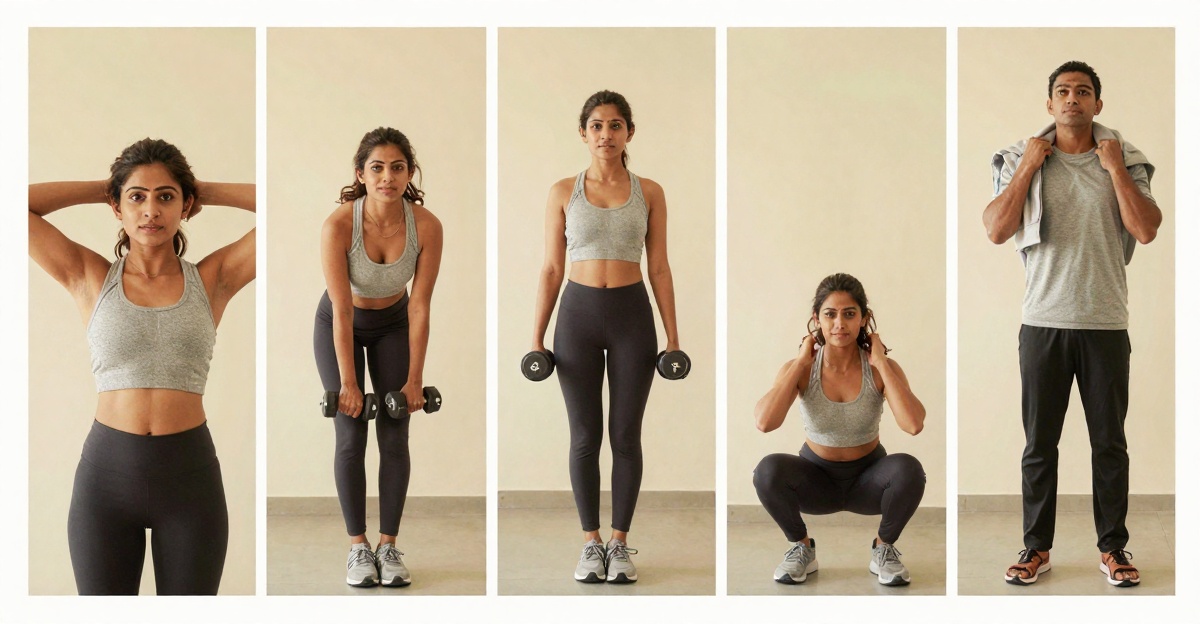
Why Strength Training Is for Everyone
Two persistent myths block beginners - especially women - from strength training:
Myth 1: "Lifting will make me bulky."
Building significant muscle mass requires years of progressive overload, substantial caloric surplus, and in men - favorable testosterone levels. The average woman has roughly 10-30 times less testosterone than the average man. Strength training for most women produces a lean, toned appearance - not bulk.
Myth 2: "Cardio is enough for fitness."
Cardiovascular exercise is excellent for heart health and caloric expenditure. But it does not build lean muscle mass, improve bone density, or meaningfully elevate resting metabolic rate. A 2022 meta-analysis in Medicine & Science in Sports & Exercise confirmed that resistance training increases resting metabolic rate by 7-8% - meaning you burn more calories at rest, even on days you don't train.
Additional strength training benefits backed by research:
- Increases bone mineral density, reducing osteoporosis risk
- Improves insulin sensitivity and glucose regulation
- Reduces symptoms of anxiety and depression
- Slows sarcopenia (age-related muscle loss) - which begins as early as age 30
The Big 5 Fundamental Movements
Every effective strength program - regardless of equipment or setting - is built around five foundational movement patterns:
1. Push - Develops chest, shoulders, triceps
- Beginner: Wall push-up → Knee push-up → Full push-up
- Gym: Dumbbell bench press, overhead press
- Key cue: Keep core braced, elbows at 45° (not flared)
2. Pull - Develops back, biceps, rear shoulders
- Beginner: Resistance band row, inverted row under a table
- Gym: Cable row, lat pulldown, dumbbell row
- Key cue: Initiate with shoulder blades, not arms
3. Hinge - Develops glutes, hamstrings, lower back
- Beginner: Good morning (bodyweight), single-leg Romanian deadlift (no weight)
- Gym: Romanian deadlift, conventional deadlift
- Key cue: Push hips back, not down - maintain neutral spine throughout
4. Squat - Develops quads, glutes, core
- Beginner: Box squat, goblet squat (light weight)
- Gym: Barbell back squat, front squat
- Key cue: Chest up, knees track over second toe, full depth to parallel
5. Carry - Develops total-body stability and grip
- Beginner: Grocery bag carry, backpack walk
- Gym: Farmer's carry with dumbbells or kettlebells
- Key cue: Shoulders packed down and back, core braced, walk tall
Beginner Strength Programs: Which One Is Right for You?
4-Week Beginner Strength Plan (3 days/week, full body):
Day A (Monday):
- Goblet squat: 3 sets × 10 reps
- Push-up (any variation): 3 sets × 8-10 reps
- Dumbbell row: 3 sets × 10 reps per side
- Plank hold: 3 × 20-30 seconds
Day B (Wednesday):
- Romanian deadlift: 3 sets × 10 reps
- Overhead press (light dumbbell): 3 sets × 10 reps
- Resistance band pull-apart: 3 sets × 15 reps
- Glute bridge: 3 sets × 15 reps
Day C (Friday):
- Split squat (bodyweight): 3 sets × 8 per leg
- Push-up: 3 sets × 10 reps
- Farmer's carry: 3 sets × 30 meters
- Dead bug: 3 sets × 8 per side
Progressive overload - the gradual, systematic increase in training demand - is the engine behind all strength gains. Each week, aim to add 1-2 reps, increase weight by the smallest increment available, or improve form quality. Without progressive overload, the body has no reason to adapt.
4. Home Workout Routines: Getting Fit Without a Gym
The gym is a tool, not a requirement. Some of the most effective fitness transformations happen in living rooms, terraces, and small apartments - with zero equipment.
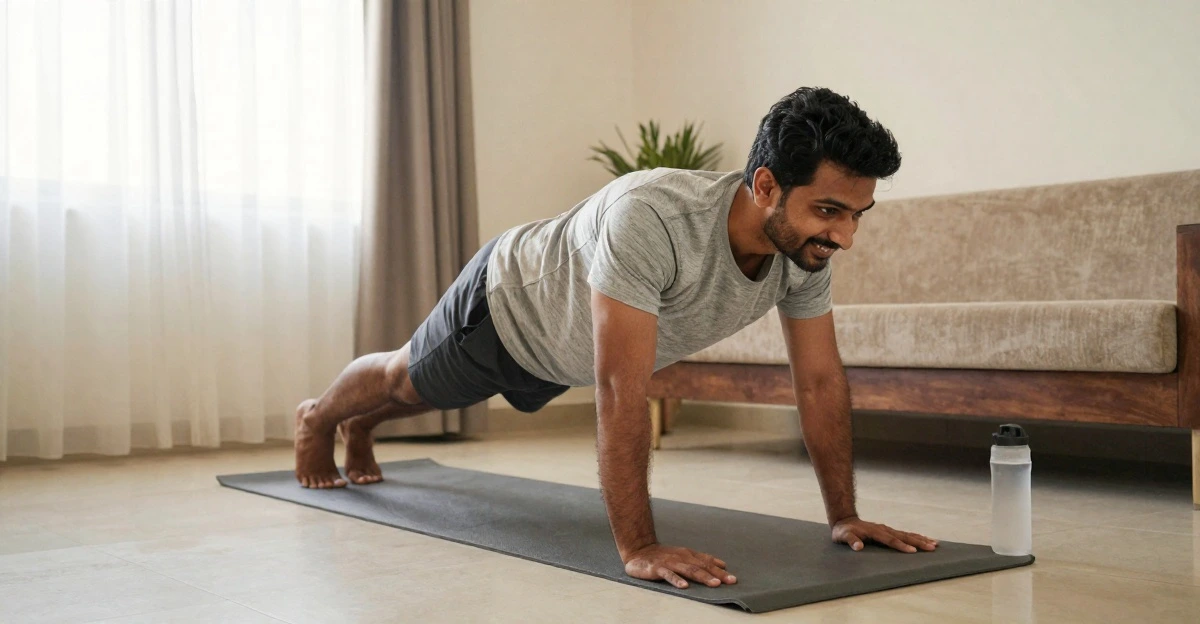
Why Home Workouts Work (When Done Right)
A 2021 study published in IJERPH (International Journal of Environmental Research and Public Health) comparing home-based and gym-based resistance training found no significant difference in strength and muscle gains between groups over 8 weeks - provided effort, progressive overload, and consistency were matched.
The psychological advantages of home training are significant:
- Zero barrier to entry: No commute, no intimidation, no membership cost
- Time efficiency: A 20-minute home workout beats a 90-minute gym trip that never happens
- Privacy: Beginners can learn movements, make mistakes, and build confidence without an audience
Minimal equipment that multiplies home workout options:
- 1-2 resistance bands (₹300-600): Adds pull exercises, assisted movements, and resistance variation
- 1 set of adjustable dumbbells: Unlocks hundreds of exercises
- A yoga mat: Comfort for floor work, stretching, and core exercises
The 20-Minute Full-Body Home Workout Framework
This structure requires zero equipment and works for complete beginners:
Warm-up - 3 minutes:
- Arm circles (30 seconds)
- Hip circles (30 seconds)
- Leg swings, front and side (30 seconds each)
- 5 slow bodyweight squats
Strength block - 12 minutes (circuit format, 40 seconds work / 20 seconds rest):
- Round 1: Push-up → Bodyweight squat → Superman hold → Standing hip hinge
- Round 2: Reverse lunge → Tricep dip (using a chair) → Glute bridge → Mountain climber (slow)
- Complete 2 full rounds
Core and stability - 3 minutes:
- Plank: 30 seconds
- Side plank (each side): 20 seconds
- Dead bug: 8 reps per side
Cool-down - 2 minutes:
- Seated hamstring stretch: 30 seconds per side
- Child's pose: 30 seconds
- Figure-four glute stretch: 30 seconds per side
Progressing at Home: From Beginner to Intermediate
Home workouts plateau when you keep doing the same thing. Here's how to progress without buying equipment:
- Tempo manipulation: A push-up performed with a 3-second descent is dramatically harder than a standard push-up
- Isometric holds: Pausing at the hardest point of a squat for 3 seconds increases time under tension
- Unilateral movements: Progress from two-leg squats to single-leg squats; from standard push-ups to archer push-ups
- Reduced rest periods: Moving from 60-second to 30-second rest periods increases cardiovascular demand significantly
Signs you've outgrown home workouts:
- You can perform 20+ full push-ups and 15+ pull-ups with perfect form
- Bodyweight squats feel effortless for 20+ reps with any tempo
- You find yourself craving external loading and cannot sufficiently challenge yourself
5. Cardiovascular Fitness: Smarter Cardio for Real Results
Cardio is not the enemy. Mindless, excessive, poorly structured cardio is.
The Cardio Confusion Problem
The persistent belief that "more cardio = more fat loss" has led millions of beginners into a cycle of long, exhausting treadmill sessions that produce minimal results and maximum misery. Here's the science:
- Steady-state cardio burns calories during the session, but the body rapidly adapts - requiring progressively more volume for the same caloric expenditure
- Excessive cardio without strength training accelerates muscle loss alongside fat loss - worsening body composition and lowering metabolic rate
- The "fat-burning zone" (50-65% of max heart rate) burns a higher percentage of fat calories but a lower total number of calories than higher-intensity work
HIIT vs LISS: Science-Backed Comparison
HIIT (High-Intensity Interval Training):
- Short bursts of maximum effort alternated with recovery periods (e.g., 30 seconds sprint / 90 seconds walk × 8 rounds)
- Produces EPOC (Excess Post-Exercise Oxygen Consumption) - elevated calorie burning for up to 24-48 hours post-workout
- A meta-analysis in the British Journal of Sports Medicine found HIIT produces 28.5% greater fat loss than continuous moderate-intensity exercise for equivalent time investment
- Caution for beginners: HIIT is high-impact and high-demand. Starting with 1 session per week maximum is recommended - more leads to overtraining and injury
LISS (Low-Intensity Steady State):
- Sustained, comfortable-pace activity (brisk walking, light cycling, swimming) for 30-60 minutes
- Dramatically underrated: a 2019 Harvard study found that walking 8,000-10,000 steps per day reduced all-cause mortality by 50-65% compared to sedentary individuals
- Actively supports recovery, reduces cortisol, and is genuinely sustainable long-term
- Ideal for beginners as a daily movement foundation
Building Your Cardio Base as a Beginner
The talk test is the most accessible way to calibrate cardio intensity: if you can speak in full sentences but feel slightly breathless, you're in the aerobic zone. If you can only manage 2-3 words at a time, you're in the high-intensity zone.
8-Week Beginner Cardio Progression:
- Week 1-2: 20-minute brisk walk, 4 days/week
- Week 3-4: 25-30 minute brisk walk/light jog intervals, 4 days/week
- Week 5-6: 30-minute continuous light jog or cycling, 3 days/week + 1 HIIT session (20 minutes)
- Week 7-8: 35-minute run or 2 HIIT sessions + 2 LISS sessions per week
6. Mobility Exercises & Posture Correction: The Missing Piece
Mobility is the fitness component that nobody prioritizes until something hurts. By then, it's already costing you performance, comfort, and quality of movement.
Why Mobility Is the Most Neglected Component of Fitness
Flexibility is the passive range of motion a muscle can achieve. Mobility is the active, controlled use of that range - and it's far more functionally important.
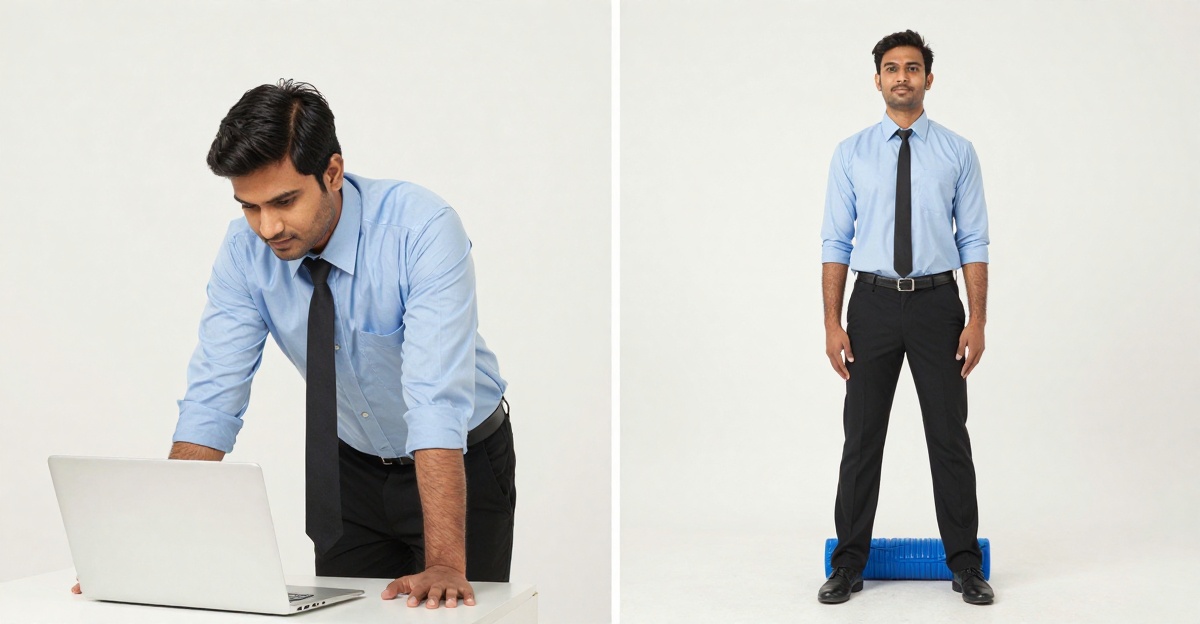
Modern sedentary life creates predictable, systemic movement dysfunction. Sitting for 8-10 hours daily:
- Shortens and tightens hip flexors
- Weakens and lengthens glute muscles
- Creates thoracic (upper back) stiffness
- Encourages forward head posture - for every inch the head moves forward of neutral, it adds approximately 10 pounds of effective load on the cervical spine
A 2020 study in Physical Therapy & Rehabilitation Journal found that targeted mobility training twice weekly significantly improved functional movement scores in sedentary office workers within just 6 weeks.
The 5 Most Important Mobility Areas to Address
- Thoracic spine: Stiffness here forces the lower back and neck to compensate - leading to pain in areas that aren't the actual problem. Fix: thread-the-needle stretch, foam roller thoracic extension
- Hip flexors: Chronically shortened from sitting - pulling the pelvis into anterior tilt and compressing the lower back. Fix: 90/90 hip stretch, couch stretch, kneeling hip flexor lunge
- Ankle dorsiflexion: Restricted ankles prevent proper squat depth and cause knee and lower back compensation. Fix: ankle circles, wall ankle mobility drill
- Shoulder mobility: Poor overhead range leads to shoulder impingement during pressing movements. Fix: doorframe chest stretch, band dislocates, overhead wall slide
- Cervical spine: Forward head posture creates chronic neck and upper trapezius tension. Fix: chin tucks, cervical rotations, neck side-bends
Posture Correction for Desk Workers
The three most common posture dysfunctions in desk workers:
Forward Head Posture - Head sitting 2-5cm forward of neutral spine
- Fix: Chin tucks (10 reps × 3 sets, hourly), ergonomic monitor height adjustment, sleeping without thick pillows
Anterior Pelvic Tilt - Excessive lower back arch, protruding abdomen
- Fix: Hip flexor stretching, glute activation (bridges, clamshells), core strengthening (dead bug, plank)
Rounded Shoulders - Internal rotation of shoulder joint, collapsed chest
- Fix: Band pull-aparts, face pulls, thoracic extension over a foam roller
10-Minute Daily Desk Worker Mobility Routine:
- Chin tucks: 10 reps
- Thoracic extension over chair: 60 seconds
- Thread-the-needle stretch: 5 reps per side
- 90/90 hip stretch: 60 seconds per side
- Doorframe chest stretch: 60 seconds
- Ankle circles: 10 rotations per direction
Step-by-Step Daily Mobility Protocol
- Morning (5 minutes): Joint mobilization sequence - neck, shoulders, wrists, hips, knees, ankles. Think of it as oiling the joints before the day's movement demands
- Post-workout (5 minutes): Targeted static stretches for the muscles trained - hold each stretch 30-45 seconds
- Evening (5 minutes): Wind-down flexibility routine - child's pose, supine spinal twist, legs-up-the-wall. Signals the nervous system to shift into parasympathetic (rest) mode
7. Active Recovery: The Science of Training Smarter, Not Harder
Here's a counterintuitive truth that elite athletes have known for decades: your fitness improves during recovery, not during training. Training is the stimulus. Recovery is where adaptation happens.

What Is Active Recovery and Why It Matters
Passive recovery is complete rest - no movement. Active recovery is low-intensity movement that promotes blood flow, reduces muscle soreness, and accelerates the repair process without adding training stress.
When you train hard, you create microscopic tears in muscle fibers. Muscle protein synthesis (MPS) - the repair and rebuilding process - requires:
- Adequate protein intake (1.6-2.2g per kg of body weight)
- Sufficient sleep (7-9 hours for optimal growth hormone secretion)
- Reduced inflammation (managed through nutrition, hydration, and movement)
A 2018 review in the Journal of Sports Sciences found that active recovery between training sessions significantly reduced delayed onset muscle soreness (DOMS) and maintained subsequent training performance better than complete rest.
Evidence-Based Active Recovery Methods
Low-intensity movement:
A 20-30 minute walk on rest days increases blood flow to recovering muscles, delivering oxygen and nutrients while clearing metabolic waste products like lactate - without adding physiological stress.
Foam rolling (Self-Myofascial Release):
The evidence is nuanced. Foam rolling does not "break up scar tissue" or "lengthen fascial lines" as popularly claimed. What it does do - supported by a 2015 meta-analysis in the International Journal of Sports Physical Therapy - is reduce DOMS perception and temporarily improve range of motion. Roll slowly (1 inch per second), pause on tender spots for 20-30 seconds.
Cold exposure:
Cold showers (ending with 30-90 seconds of cold water) activate the vagus nerve and reduce acute inflammation. Cold water immersion (10-15°C for 10-15 minutes) has stronger evidence for reducing DOMS in high-volume training - but for beginners, a cold shower finish is sufficient and highly accessible.
Sleep - the master recovery tool:
During deep sleep stages (NREM Stage 3), the pituitary gland releases growth hormone - the primary driver of tissue repair and muscle protein synthesis. Matthew Walker's research at UC Berkeley established that sleep deprivation below 7 hours reduces muscle protein synthesis by up to 18% and significantly impairs next-day training performance.
Building Recovery Into Your Weekly Training Schedule
Sample beginner weekly schedule:
- Monday: Strength training (Day A)
- Tuesday: Active recovery (20-minute walk + 10-minute mobility)
- Wednesday: Strength training (Day B)
- Thursday: LISS cardio (30-minute brisk walk or light cycling)
- Friday: Strength training (Day C)
- Saturday: Active recovery or light yoga/mobility session
- Sunday: Complete rest
Overtraining syndrome warning signs:
- Persistent fatigue that doesn't resolve after a rest day
- Declining performance despite continued training
- Elevated resting heart rate (3-5+ bpm above normal baseline)
- Mood disturbances, irritability, loss of motivation
- Frequent minor illness (suppressed immunity)
Deload weeks - periods of reduced training volume and intensity (every 4-6 weeks for beginners) - are not signs of weakness. They are planned recovery investments that allow the body to fully absorb adaptation before the next training block.
8. Building Your Long-Term Fitness Blueprint
The difference between people who transform their fitness and people who stay stuck in a cycle of starting over is not genetics, willpower, or time. It's system design.
Periodization for Beginners: Planning Months, Not Just Weeks
Periodization is the systematic variation of training variables (volume, intensity, exercise selection) over time to prevent plateaus and manage fatigue. It sounds advanced - but even the simplest version produces dramatically better results than random training.
Linear periodization (ideal for beginners): Each week, progressively add small amounts of load or volume. Week 1 baseline → Week 4 peak → Week 5 deload → new cycle begins at higher baseline.
12-Week Fitness Transformation Roadmap:
- Weeks 1-4 (Foundation): Master movement patterns, build consistency, establish baseline
- Weeks 5-8 (Development): Increase training volume, add cardio, introduce progressive overload
- Weeks 9-11 (Intensification): Increase weights, reduce rest periods, add advanced variations
- Week 12 (Deload + Reassess): Reduce volume by 40%, re-test Week 1 benchmarks, celebrate measurable progress
Tracking Progress Without Obsessing Over the Scale
The weighing scale is one of the least informative tools for tracking fitness progress - especially in the first 8-12 weeks, when muscle gain and fat loss can occur simultaneously, keeping scale weight relatively stable while body composition improves dramatically.
Better metrics to track:
- Strength PRs: Can you do more push-ups, hold a longer plank, lift heavier than Week 1?
- Resting heart rate: Should decrease as cardiovascular fitness improves (aim for below 70 bpm)
- Energy levels: Rated 1-10 each morning - a reliable proxy for overall health improvement
- Sleep quality: Deeper, more restorative sleep is a consistent early indicator of improving fitness
- Clothing fit: How clothes fit around the waist, shoulders, and thighs reflects real body composition change
Fitness and Mental Health: The Inseparable Connection
The brain benefits of exercise are as profound as the physical ones. Regular strength and cardio training:
- Increases BDNF (Brain-Derived Neurotrophic Factor) - called "Miracle-Gro for the brain" - promoting neurogenesis and protecting against cognitive decline
- Elevates endorphins and serotonin - producing the well-documented "runner's high" and antidepressant effect
- Builds genuine self-efficacy - the belief that you are capable of doing hard things - which transfers powerfully into professional and personal life
A meta-analysis in JAMA Psychiatry found that exercise was as effective as antidepressants for mild to moderate depression - and produced no adverse side effects. (For deeper strategies, explore the Mental Health & Emotional Resilience Pillar - internal link.)
When to Work With a Personal Trainer
A qualified trainer accelerates results, prevents injury, and provides accountability. Consider professional coaching when:
- You've been training consistently for 4+ weeks with no measurable progress
- You experience recurring pain or discomfort during specific movements
- You want to learn barbell movements (deadlift, squat, bench press) safely
- Motivation and accountability are your primary challenges
In India, look for trainers certified by ACSM (American College of Sports Medicine), NSCA (National Strength and Conditioning Association), or ACE (American Council on Exercise). Platforms like Fittr, CureFit (Cult.fit), and HealthifyMe offer structured online coaching that is accessible, affordable, and increasingly high-quality.
Final Thoughts: Fitness Is a Practice, Not a Performance
The greatest fitness transformation isn't measured in kilograms lost or muscles gained. It's the moment when exercise stops being something you have to do and becomes something you genuinely want to do - because of how it makes you think, sleep, move, and feel.
That shift doesn't happen overnight. It happens through small, consistent actions, stacked week after week, until movement becomes as natural as eating or sleeping. Start with the 20-minute home workout. Master the Big 5 movements. Walk every day. Sleep like it's your job. Recover with intention.
Your body was built to move. Give it the chance.