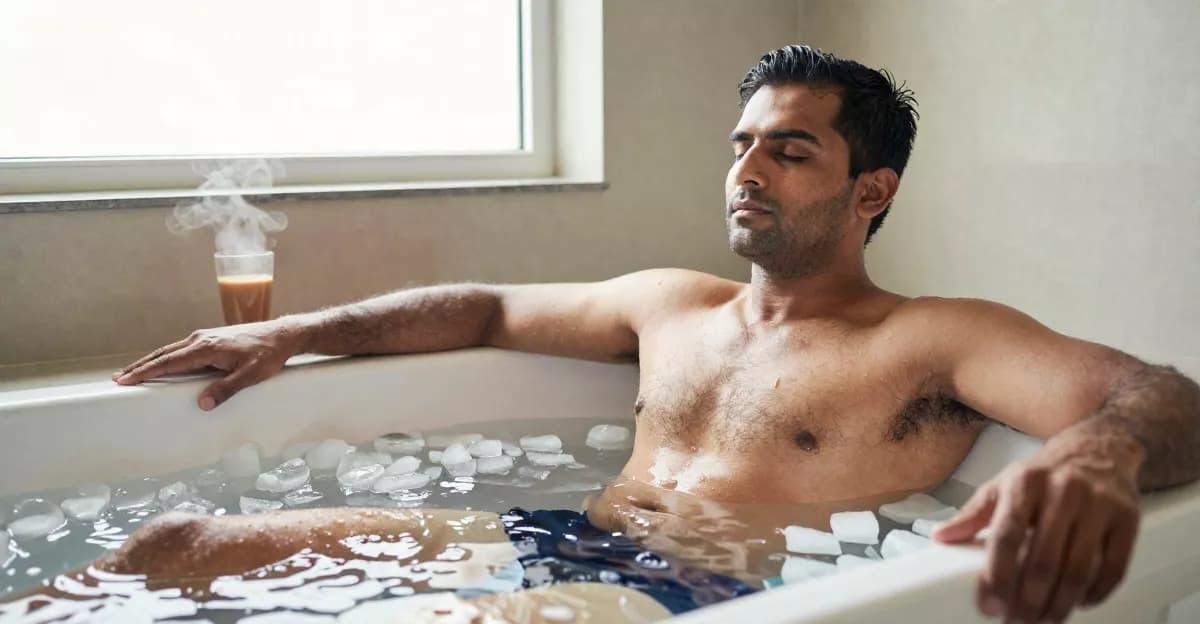
There is a moment, when you first step into genuinely cold water, that every rational part of your brain fires simultaneously in protest. The gasp reflex activates. Your heart rate spikes. Your skin lights up with sensation that is somewhere between pain and electricity. Everything biological in you insists this is wrong - that warmth is safety and cold is threat - and for approximately ten seconds, the only thing standing between you and immediate exit is the quieter part of your mind that knows the next two minutes will be worth it.
That moment of protest is, as it turns out, precisely the point.
Cold exposure - whether through ice baths, cold plunges, cold showers, or open water swimming - is one of the oldest recovery tools in human history, practiced across cultures from Scandinavian ice swimming and Japanese Misogi purification rituals to the cold creek immersions of ancient Roman athletic training. For most of that history, its practitioners justified it through observation and tradition: it reduced swelling, sharpened the mind, accelerated recovery, built resilience. Modern science has spent decades trying to confirm, complicate, and refine those intuitions - and arrived at a picture that is both more nuanced and more interesting than the simple "cold water cures everything" narrative that social media tends to present.
Here is what the research actually says - including the parts that are genuinely well-established, the parts that are more complicated than commonly claimed, and the practical protocol that makes cold exposure work for you rather than against you.
The Physiology of Cold: What Happens in the First 120 Seconds
The cascade of physiological responses to cold immersion begins immediately and unfolds in overlapping waves - cardiovascular, neurological, hormonal, and cellular - that together produce the recovery and performance effects that have made this practice so persistently popular among athletes and high performers.
The Cold Shock Response (0-30 seconds): Contact with cold water (below 15°C) triggers the cold shock response - an involuntary, reflexive activation of the sympathetic nervous system. Heart rate accelerates sharply. Blood pressure rises. The gasp reflex fires. Peripheral blood vessels constrict violently - vasoconstriction - redirecting blood flow away from the skin and extremities toward core vital organs. This initial response is the most dangerous phase for unsupervised cold water immersion (it can trigger cardiac arrhythmia in vulnerable individuals) and the most neurologically powerful - flooding the system with norepinephrine and triggering the alertness and mood elevation that cold practitioners consistently report.
The Thermal Adaptation Phase (30 seconds-10 minutes): As the nervous system partially adapts to the cold signal, the initial shock symptoms subside. Breathing slows and deepens. Heart rate moderates. The body's thermogenic mechanisms - shivering, brown adipose tissue activation, metabolic rate elevation - engage to maintain core temperature. It is during this sustained cold exposure phase that the most significant physiological changes occur:
- Norepinephrine release surges by 2-3 times baseline - one of the largest acute norepinephrine responses producible through any non-pharmacological means. This is the neurochemical primarily responsible for cold exposure's mood elevation, focus enhancement, and stress resilience effects.
- Brown adipose tissue (BAT) activation - unlike white fat (storage), brown fat is metabolically active and thermogenically productive. Repeated cold exposure stimulates BAT development and activity, increasing metabolic rate and improving insulin sensitivity over time.
- Anti-inflammatory signaling begins - cold water reduces tissue temperature in immersed areas by several degrees, slowing metabolic activity, reducing enzymatic inflammatory processes, and decreasing nerve conduction velocity (which reduces pain perception).
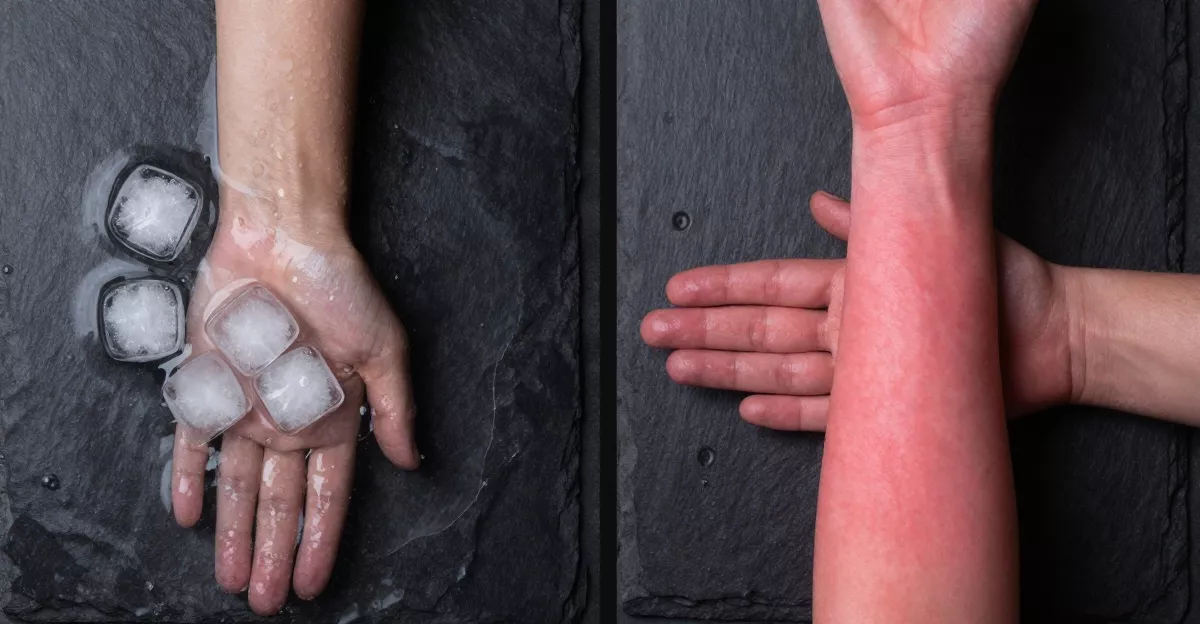
Post-Immersion Rewarming: The rewarming phase that follows cold immersion produces a reactive vasodilation - blood vessels that were constricted during exposure dilate significantly in recovery, dramatically increasing blood flow to peripheral tissues. This vascular flush is one of the most significant mechanisms by which cold exposure supports recovery: it delivers oxygen and nutrients to muscles while clearing metabolic waste products.
Deep Dive
To dive deeper into this topic, read our comprehensive guide: The Ultimate Sleep Guide: Optimizing Sleep Hygiene & Circadian Rhythm
The Recovery Evidence: What Cold Actually Does and Doesn't Do
This is where intellectual honesty becomes essential - because the popular narrative around cold exposure has outrun the science in some areas, while the science has confirmed other benefits more robustly than most people realize.
What Is Well-Established?
DOMS reduction and muscle soreness is the area with the strongest and most consistent evidence base. A 2025 meta-analysis published in Frontiers in Physiology - analyzing 35 randomized controlled trials comparing different cold water immersion protocols - found that cold water immersion at 11-15°C for 10-15 minutes was the most effective protocol for reducing muscle soreness, while immersion at 5-10°C for 10-15 minutes produced the greatest improvements in biochemical markers of muscle damage (creatine kinase levels) and neuromuscular recovery. The mechanism is vasoconstriction reducing inflammatory mediator accumulation, combined with reduced tissue temperature slowing metabolic processes that perpetuate damage.
Psychological and stress recovery effects are increasingly well-documented. A 2025 systematic review published in PLOS ONE - analyzing 11 studies with 3,177 participants - found that cold water immersion significantly reduced stress markers, improved sleep quality, and produced measurable quality of life improvements. Crucially, the review noted that cold water immersion produced a temporary spike in inflammation immediately post-immersion - an initial immune activation that functions similarly to exercise-induced stress: the body adapts and becomes more resilient through the controlled stressor.
Immune function enhancement from regular cold shower exposure was confirmed in a 2024 study published in ScienceDirect, which found 90 days of regular cold showers significantly increased immunoglobulin levels, IL-2, and IL-4 - markers of both humoral and cell-mediated immunity. Separately, a Dutch study of 3,018 adults found that those taking cold showers had 29% fewer sick days than control group participants - a statistically robust finding across a large real-world population.
Cellular autophagy enhancement - one of the most exciting recent findings - was reported in research suggesting that repeated cold exposure significantly improves autophagic function: the cellular housekeeping process that clears damaged proteins and organelles and is strongly linked to longevity and disease prevention. As the Times of India reported, researchers described this as "a tune-up for the body's microscopic machinery" - potentially connecting cold exposure to the same cellular health mechanisms targeted by fasting and caloric restriction.
The Important Nuance: Timing and Training Goals Matter
Here is where the science becomes nuanced in a way that most cold exposure advocates underemphasize: cold water immersion immediately after strength or hypertrophy training may blunt long-term muscle adaptation.
Research published in PMC and confirmed in multiple follow-up studies found that cold water immersion, when applied within 1 hour of resistance training, reduces the inflammatory signaling that is required for muscle protein synthesis and hypertrophic adaptation. The same inflammation you are trying to suppress is part of the biological signal that tells muscles to grow larger and stronger. Suppressing it accelerates short-term recovery but may reduce long-term strength and size gains - a direct performance trade-off that matters enormously for anyone training primarily for muscle development.
The Mayo Clinic's analysis of ice bath science frames this clearly: cold therapy is most beneficial for recovery between competitions, high-volume athletic seasons, and injury management - but may be counterproductive when long-term tissue adaptation is the primary training goal.
The practical rule of thumb:
- Between competitions or hard training blocks where performance maintenance matters more than maximum adaptation: cold immersion is highly beneficial
- During a hypertrophy training phase focused on muscle growth: cold immersion immediately post-training is counterproductive - wait at least 4-6 hours or use it on rest days only
- For general recovery, stress management, and mental resilience independent of specific training goals: cold exposure delivers consistent benefits regardless of timing
Cold Showers vs. Ice Baths vs. Cold Plunges: The Practical Hierarchy
Cold showers are the most accessible entry point - available to virtually everyone, requiring no equipment, and delivering meaningful neurological and immune benefits even if the recovery effects on deep muscle tissue are less pronounced than full immersion. The mechanism difference: a cold shower cools the skin surface and triggers the sympathetic nervous system cascade, but does not lower deep muscle tissue temperature the way full immersion does. For mental resilience, morning activation, and immune function, cold showers are highly effective. For DOMS reduction and post-exercise muscle recovery, immersion is meaningfully superior.
Ice baths (a bathtub filled with cold water and ice to achieve 10-15°C) are the most practically accessible full-immersion option for home use. Fill the bath with cold water, add 2-4 bags of ice to reach target temperature, and immerse to waist or chest level. A waterproof thermometer to verify temperature makes the protocol precise rather than approximate - and the temperature difference between 12°C and 18°C is physiologically significant.
Cold plunge tubs (purpose-built insulated tubs with chilling systems) are increasingly available at gyms, recovery studios, and as home units - the fastest-growing category in the wellness equipment market. They maintain consistent temperature without ice preparation and are the most convenient protocol for regular practice. In Indian cities, dedicated cold plunge facilities are appearing in premium gyms and wellness centers in Mumbai, Delhi, and Bangalore.
Open water swimming - rivers, lakes, the sea - delivers all of the above benefits plus the psychological effects of natural environment immersion, which research suggests amplify mood and stress reduction benefits beyond equivalent indoor cold exposure.
The Protocol: How to Use Cold Exposure Intelligently?
For beginners - the progressive entry:
Week 1-2: End each shower with 30 seconds of cold water. Focus on controlled breathing - exhale through the mouth to manage the gasp reflex rather than being controlled by it.
Week 3-4: Extend to 60-90 seconds of cold at the end of each shower.
Week 5+: Progress to 2-3 minute cold showers or introduce brief cold plunge immersions.
The breathwork is not optional - it is central. Slow, controlled exhale-focused breathing during cold exposure activates the parasympathetic nervous system alongside the sympathetic response, allowing you to stay in the cold long enough for the physiological adaptation to occur. This is the basis of Wim Hof Method's breathing protocols, which have been confirmed in controlled research to produce measurable changes in immune and autonomic function during cold stress.
For athletes - post-training cold protocol:
- Endurance training days (running, cycling, rowing): Cold immersion 10-15°C for 10-15 minutes within 1-2 hours of training - optimal for lactate clearance, DOMS prevention, and recovery for the next session
- Strength / hypertrophy days: Skip immediate post-training cold immersion. Use on the following rest day or wait 4-6 hours minimum before brief cold exposure
- Competition weeks: Daily cold immersion to maintain performance readiness and reduce accumulated fatigue
Temperature and duration reference:
| Protocol | Temperature | Duration | Best For |
| Cold shower - beginner | 20-18°C | 30-90 seconds | Mental activation, habit building |
| Cold shower - experienced | 15°C or below | 2-3 minutes | Immune function, daily resilience |
| Cold immersion - recovery | 11-15°C | 10-15 minutes | DOMS reduction, between competitions |
| Cold immersion - muscle damage | 5-10°C | 10-15 minutes | CK reduction, neuromuscular recovery |
The Mental Benefits: Where Cold Exposure Earns Its Reputation
The physical recovery benefits of cold exposure are real and increasingly well-quantified. But many dedicated practitioners argue that the psychological benefits are equally - or more - significant, and the research is increasingly supportive of this view.
A comprehensive 2024 PMC review on cold water therapy and its untapped potential for health and longevity confirmed that regular cold water immersion produces measurable improvements in mood, anxiety, depression symptoms, and subjective quality of life across multiple population groups. The mechanism is multifactorial: the norepinephrine surge produces acute mood elevation; the repeated practice of staying calm under physiological stress builds the nervous system's general resilience to stressors; and the daily act of choosing voluntary discomfort trains a psychological disposition of agency and self-efficacy that transfers to other areas of life.
This last point - which is harder to measure but consistently reported by practitioners - may be the most significant long-term benefit of a regular cold exposure practice. The cold shower is not just a recovery tool. It is a daily training session for the part of the mind that chooses discomfort in service of growth, even when every instinct objects.
That capacity - built two minutes at a time, in cold water, at the start of each day - is not a small thing.