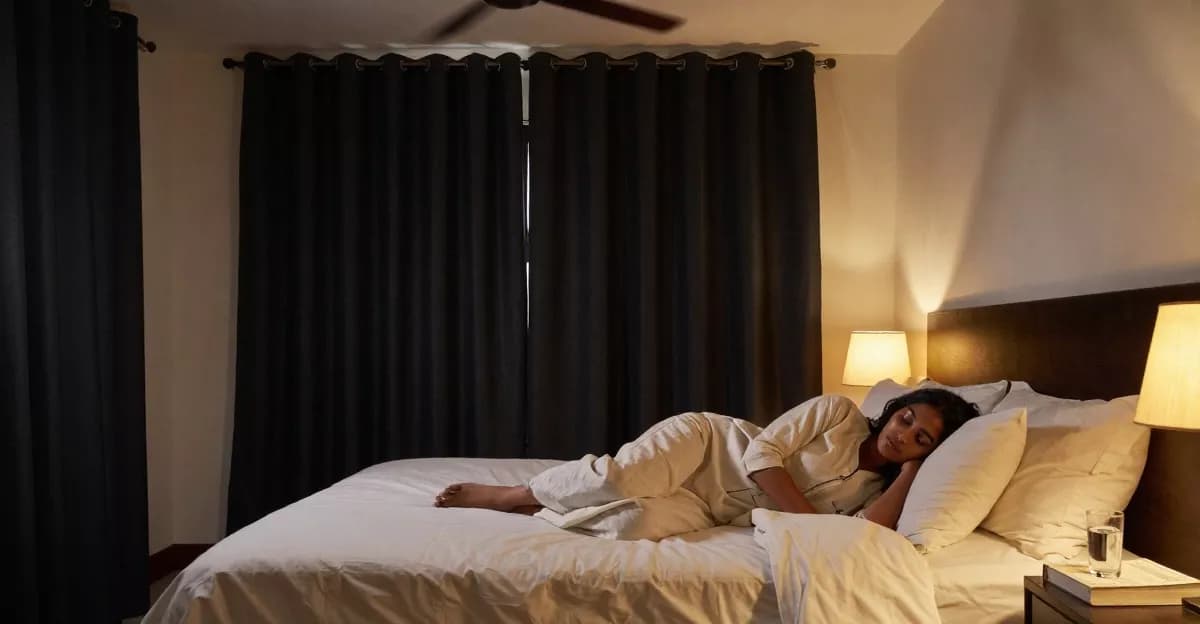

Somewhere in the middle of your afternoon - typically between 1 PM and 3 PM - your body sends you a message that most modern work cultures have taught you to ignore. Your eyelids feel heavier. Your concentration drifts. The task in front of you, which seemed perfectly manageable at 10 AM, now requires what feels like a disproportionate amount of willpower to sustain. You reach for coffee. You push through. You tell yourself this is just weakness, or distraction, or insufficient discipline.
It is none of those things. It is biology.
The post-lunch dip in alertness is not caused by eating - it exists even in people who skip lunch entirely. It is a hardwired feature of human circadian physiology - a secondary sleep gate programmed into the biological clock by the same evolutionary forces that determined when we wake and when we sleep. For most of human history, this window was honored. The siesta was not a cultural indulgence. It was a civilizational response to a universal biological signal.
Modern work culture decided to override it. The science suggests we have been paying a measurable performance price ever since.
The NASA Study That Changed the Conversation
In 1995, researchers at NASA conducted what would become one of the most cited studies in sleep science - and one that most people who quote it have never actually read. The study examined long-haul flight crews during transatlantic and transpacific routes - professionals operating under sustained cognitive demand in a fatigue-critical environment where performance errors have life-or-death consequences.
The finding, now widely documented by the Sleep Foundation's analysis of the NASA nap research, was striking: pilots who were given a 40-minute nap opportunity - of which they slept on average 26 minutes - showed a 54% improvement in alertness and a 34% improvement in job performance compared to the control group who did not nap. By the end of the flights, non-napping pilots showed twice the level of physiological sleepiness as their napping colleagues - a difference that was not subjective but measurable through EEG and reaction time testing.
NASA's own ultimate recommendation, based on this and subsequent research, settled on 10-20 minutes as the practical optimal nap window - long enough to capture the performance benefits of light sleep stages, short enough to avoid entering the deep sleep that produces the grogginess known as sleep inertia.
The significance of this finding for ordinary working adults is direct: if a short nap can produce a 34% performance improvement in long-haul airline pilots - professionals whose baseline alertness is professionally maintained and whose cognitive demands are among the highest in any occupation - the implications for the average office worker, student, or entrepreneur running on inadequate sleep are even more significant.
Deep Dive
To dive deeper into this topic, read our comprehensive guide: The Ultimate Sleep Guide: Optimizing Sleep Hygiene & Circadian Rhythm
The Science of What Happens During a Power Nap
A power nap is not simply doing nothing for 20 minutes. It is a targeted neurological intervention - and understanding what is happening in the brain during those minutes explains why the performance benefits are so consistent and so measurable.
Adenosine clearance is the primary mechanism. Adenosine is a byproduct of neural activity that accumulates in the brain throughout waking hours - it is the molecule responsible for the progressive build-up of sleep pressure as the day continues. During sleep - even very brief sleep - the brain's glymphatic system partially clears adenosine from synaptic spaces, temporarily reducing sleep pressure and restoring the neurochemical conditions associated with alert wakefulness. This is the same mechanism caffeine exploits: it works by blocking adenosine receptors rather than clearing the molecule - which is why caffeine wears off as adenosine accumulates further.
Stage 2 NREM sleep - the sleep stage entered within the first 5-10 minutes of drifting off - is characterized by sleep spindles: brief bursts of synchronized neural oscillation at 12-15 Hz that have been specifically linked to memory consolidation and motor skill enhancement. Multiple studies have shown that even a 20-minute nap containing Stage 2 sleep measurably improves both declarative memory (facts and information) and procedural memory (physical and skill-based learning). For students, athletes, musicians, and anyone learning new skills, the nap is not an interruption of the learning process - it is part of it.
Theta wave restoration - identified in research published in ScienceDirect - shows that midday napping restores theta activity in the prefrontal cortex, directly improving working memory capacity and information processing efficiency in the post-nap period. The neural synchronization produced by even brief sleep is measurably superior to an equivalent period of quiet wakefulness for restoring these capacities.
A 2024 review of nap timing and performance, published in PURI Research, confirmed that short naps of 5-20 minutes reliably improve mood, short-term memory, alertness, and response time across diverse populations - from students to athletes to shift workers. The optimal nap window, based on meta-analytic evidence, is between 12:30 PM and 4:30 PM, with 2 PM identified as the single most effective nap time for maximizing performance benefit while minimizing nighttime sleep disruption.
Sleep Inertia: The Enemy of the Poorly Timed Nap
If power naps are so effective, why do some people wake from afternoon rests feeling worse than before they lay down - groggy, disoriented, unable to function for 30-60 minutes?
The answer is sleep inertia - the temporary impairment of cognitive function and motor performance that occurs when you are awakened from deep sleep (NREM Stage 3 / slow-wave sleep). Slow-wave sleep produces powerful restorative effects - it is the most physically and neurologically regenerative sleep stage - but it also produces the deepest sleep inertia upon awakening. Waking from slow-wave sleep feels like emerging from underwater: consciousness returns slowly, reasoning is impaired, and reaction times are significantly slowed.
The critical threshold: slow-wave sleep typically begins approximately 25-30 minutes into a nap for most adults. This is why the evidence converges so strongly on the 20-minute maximum for power napping - staying under this threshold keeps you in the lighter, more immediately restorative Stage 1 and Stage 2 sleep without crossing into the slow-wave territory that produces inertia.
Research published in the Oxford Academic Sleep journal found that naps up to 30 minutes - but not exceeding it - produce measurable cognitive benefits that persist for up to 2.5 hours post-waking, with the sleep inertia period largely resolved within 15-20 minutes of awakening. Beyond 30 minutes, the inertia cost begins to offset the performance benefit unless you have sufficient time to fully sleep through a complete 90-minute cycle.
The practical implication is precise: set your nap alarm for 20 minutes. Not 25. Not 30. Twenty minutes keeps you in the performance-enhancing sleep stage and out of the inertia-inducing one.
The Coffee Nap: Counterintuitive, Research-Validated
Here is one of sleep science's most elegant practical hacks - and one that most people find genuinely surprising when they first encounter it.
The caffeine nap (also called a "coffee nap") involves drinking a cup of coffee immediately before lying down for a 20-minute nap. The logic: caffeine takes approximately 20-30 minutes to be absorbed from the gut and begin blocking adenosine receptors in the brain. If you consume coffee and immediately nap, you benefit from full adenosine clearance during the nap - and then the caffeine activates precisely as you are waking, blocking the newly cleared adenosine receptors.
The result: you wake from the nap with both the neurological benefits of the rest and the stimulant effect of caffeine simultaneously - a performance combination that multiple studies have found superior to either coffee or napping alone. Research from Loughborough University found that caffeine nappers made significantly fewer errors in driving simulations than those who used only caffeine or only a nap - a finding with obvious implications for anyone who needs sustained afternoon performance.
How to execute it: Drink a small espresso or strong coffee (approximately 100-150mg caffeine). Lie down immediately. Set an alarm for 20 minutes. The caffeine will not prevent you from falling asleep - it takes too long to absorb. Wake when the alarm sounds, allow 5-10 minutes for caffeine onset, and re-engage with your afternoon with both recovery systems active.
Who Uses Strategic Napping - and What It Tells Us
The list of confirmed strategic nappers among high performers is long and instructive. Winston Churchill napped daily during World War II, calling it essential to his capacity to function under the sustained cognitive pressure of wartime leadership. Albert Einstein, Thomas Edison, and Leonardo da Vinci were all documented nappers - though Edison notably used naps in his famous polyphasic sleep schedule. More recently, athletes across professional sport have systematically incorporated napping into training schedules as a performance optimization tool, with research confirming improvements in sprint times, reaction speed, and decision-making accuracy following strategic naps.
According to a widely shared analysis in BBC Future's deep-dive on power nap research, sports scientists now routinely recommend napping as a recovery and performance tool alongside nutrition and physical training - with some researchers describing the desire to "bottle napping and give it to their athletes like a dietary supplement". The performance effects of a well-timed 20-minute nap are not meaningfully different in kind from those of a legal ergogenic aid - they are simply free, accessible, and carry no side effects when properly timed.
In India, the afternoon rest - dopahar ki neend - has deep cultural precedent in many regions, particularly in warmer climates where it serves both physiological and thermal regulation purposes. The cultural permission to rest midday is not laziness encoded in tradition. It is thousands of years of empirical observation that afternoon rest improves the quality of the afternoon.
The Complete Power Nap Protocol
Timing: Between 1 PM and 3 PM. Never after 4 PM - late naps reduce sleep pressure for the night, pushing sleep onset later and fragmenting nocturnal sleep architecture.
Duration: 20 minutes maximum for a pure power nap. If you have 90 minutes and want full restorative benefits, sleep a complete NREM-REM cycle - but plan for 15-20 minutes of sleep inertia upon waking.
Environment:
- Darkness or eye mask - even low light slightly suppresses the brain's transition into sleep
- Reduce noise - earplugs or white noise if your environment is disruptive
- Temperature slightly cool - the same core temperature drop that initiates nighttime sleep facilitates napping
- Lie down if possible - research confirms horizontal position produces faster sleep onset than sitting upright, though seated napping is significantly better than no nap
Pre-nap ritual:
- Optional coffee nap preparation - drink small espresso immediately before lying down
- Set phone to airplane mode with a single 20-minute alarm - notifications during a nap are worse than no nap
- A simple body scan or slow breathing practice for 2-3 minutes accelerates sleep onset
Post-nap:
- Allow 5-10 minutes before demanding cognitive tasks - even without significant sleep inertia, the transition back to full alertness benefits from a brief gentle re-entry
- Hydrate - mild dehydration on waking is common and amplifies any residual grogginess
- Brief physical movement - walking to the kitchen and back is sufficient to fully clear sleep inertia and signal daytime mode to the nervous system
A Note on Napping and Nighttime Sleep
The most common concern about napping is that it will disrupt nighttime sleep. The evidence suggests this concern is valid only when naps are too long, too late, or compensating for severely deficient nighttime sleep.
For adults sleeping adequate nighttime hours (7-9 hours) and napping within the guidelines above - 20 minutes, before 3 PM, not daily if not needed - the Indian Express's review of sleep researcher guidance confirms that strategic napping does not meaningfully reduce nighttime sleep quality or duration. The post-lunch dip exists independently of nighttime sleep adequacy - addressing it with a short nap is not borrowing from the night. It is deploying a biological tool that evolution placed precisely at that point in the day for exactly this purpose.
The cultures that have preserved the practice - Spain, Japan, Greece, Costa Rica, and large parts of India - were not being unproductive. They were being biologically intelligent. The rest of the world is slowly, through research, arriving at the same conclusion.
Your afternoon energy slump is not a problem to be powered through. It is an invitation. Twenty minutes is all it takes to answer it correctly.