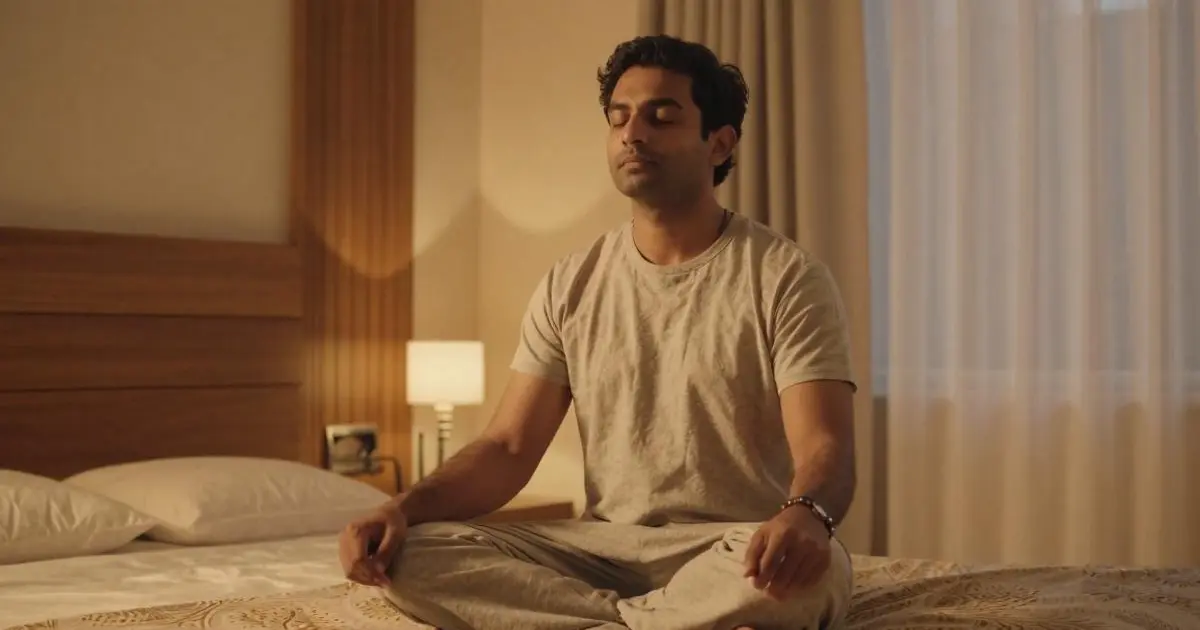

You finished a hard workout yesterday. Maybe it was leg day. Maybe it was a long run. Maybe it was a particularly punishing HIIT session that left you lying on the floor wondering what you had done to yourself. Today, your legs are stiff, your lower back is complaining quietly, and your entire body seems to be staging a polite but firm protest.
So you face the rest day question that every person who trains seriously eventually confronts: do you rest completely - horizontal, guilt-free, television and all - or do you get up, move gently, and do something lighter to aid the recovery process?
The instinct is often to do nothing. Rest means rest, right?
As it turns out, the science has something considerably more nuanced to say about this. And understanding the difference between active and passive recovery - when each is appropriate, what each actually does to your physiology, and how to use them strategically - is one of the most underutilized tools in the fitness toolkit.
What Is Passive Recovery?
Passive recovery is exactly what it sounds like: complete rest. No structured exercise, no deliberate movement beyond the ordinary activity of daily life. You sleep. You sit. You walk to the kitchen and back. Your body handles the repair process without any deliberate assistance from additional movement.
This is not laziness. Passive recovery serves a genuine and irreplaceable biological function - particularly following the kind of training stress that causes significant muscle damage or central nervous system fatigue. During passive rest, the body directs its resources toward:
- Muscle protein synthesis: The repair and rebuilding of muscle fibers damaged during training - the process through which muscles grow stronger
- Glycogen resynthesis: Restoring muscle and liver glycogen stores depleted by intense exercise - the primary fuel for high-intensity and endurance effort
- Nervous system recovery: Particularly relevant after maximal strength work, heavy powerlifting, or high-volume training that taxes the central nervous system (CNS) rather than just peripheral muscles
- Hormonal rebalancing: Cortisol - elevated during and after intense training - normalizes during genuine rest, allowing anabolic hormones to drive adaptation
The critical point: passive recovery is not doing nothing. It is doing something specific - enabling the full cascade of physiological repair - and it requires actual rest to function optimally. Continuing to train on muscles that have not yet completed their repair cycle does not make you tougher. It interrupts the adaptation process and increases injury risk.
Deep Dive
To dive deeper into this topic, read our comprehensive guide: The Ultimate Sleep Guide: Optimizing Sleep Hygiene & Circadian Rhythm
What Is Active Recovery?
Active recovery is low-intensity, deliberate movement performed on rest days or between training sessions - movement whose intensity is explicitly calibrated to enhance recovery rather than create additional training stress.
The operational threshold is important: active recovery must stay below 60% of maximum heart rate - a fully conversational pace at which you could hold a comfortable conversation without breathlessness. Above this threshold, the activity begins to generate its own metabolic and muscular stress rather than simply facilitating the clearance of existing stress.
Common active recovery modalities include:
- Easy walking (20-45 minutes at a casual, unhurried pace)
- Light swimming or pool walking - particularly valuable because water provides gentle resistance and compression while eliminating impact stress
- Easy cycling - stationary or outdoors at a pace that requires no effort
- Gentle yoga or mobility work - focusing on range of motion and parasympathetic activation rather than intensity
- Light stretching or foam rolling - supporting circulation and reducing muscle stiffness
- Tai chi - research actually confirms tai chi is among the most effective active recovery modalities for older adults, improving both physical recovery and sleep quality simultaneously
The defining characteristic of all these activities: they feel easy. If it feels like a workout, it is too intense to qualify as active recovery.
The Physiology: Why Active Recovery Works
The primary mechanism behind active recovery's benefits is elegantly simple: blood flow.

When you exercise - even at very low intensity - your cardiovascular system increases circulation to working muscles. This enhanced circulation does two critically important things simultaneously:
First, it clears metabolic byproducts. Intense exercise produces lactic acid (more precisely, lactate and hydrogen ions) alongside other metabolic waste products that accumulate in muscle tissue and contribute to the burning sensation and fatigue of exertion. Active recovery accelerates the clearance of these compounds by maintaining elevated circulation - effectively flushing the system more efficiently than passive rest allows. This is why you instinctively keep moving after a hard sprint rather than sitting down immediately - the continued movement is your body's natural active recovery protocol.
Second, it delivers repair resources. The same enhanced blood flow that removes waste also delivers oxygen, amino acids, glucose, and growth factors to muscle tissue - the raw materials of repair. Passive rest allows circulation to return to baseline, which slows this delivery. Active recovery keeps the supply chain partially open.
A landmark ACE (American Council on Exercise) sponsored research study found that active recovery was significantly superior to passive recovery at maintaining endurance performance between training bouts. When passive recovery was used, time to fatigue in the second running trial dropped by approximately 52 seconds. When active recovery was used, it dropped by only 18 seconds - a statistically significant and practically meaningful difference. For power output, the results were even more striking: passive recovery led to a 5.7% decline in peak power between bouts, while active recovery produced only a 0.8% decline.
For DOMS (Delayed Onset Muscle Soreness) - the stiffness and soreness that peaks 24-48 hours after unfamiliar or intense exercise - active recovery consistently reduces perceived severity by 20-40% compared to complete rest. The mechanism: increased circulation reduces the inflammatory signaling and muscle guarding that produce the sensation of soreness, without interrupting the underlying repair process that inflammation is driving.
When to Choose Active Recovery Over Passive Rest
The choice between active and passive recovery is not a matter of preference - it is a matter of matching the recovery modality to the training stimulus that preceded it and the demands that follow.
Choose active recovery when:
- You trained at moderate to high intensity with significant cardiovascular demand - running, cycling, HIIT, sports - and soreness is muscular rather than structural. Active recovery's lactate clearance and circulation benefits are most relevant in this context.
- You are training on consecutive days and need to maintain performance for tomorrow's session. The ACE research is unambiguous here: active recovery between sessions produces significantly better performance preservation than passive rest.
- You are experiencing DOMS that is uncomfortable but not painful - the distinction is important. Stiffness and muscular tenderness respond well to gentle movement. Sharp, localized pain does not.
- Your training volume is moderate and your CNS is not depleted. If you finished your session feeling tired but not comprehensively exhausted, active recovery is appropriate.
- You are a regular exerciser whose body is adapted to consistent training loads and who will feel psychologically worse from complete inactivity than from gentle movement.
Choose passive recovery when:
- You have trained to genuine maximal intensity - a competition, a one-rep max attempt, an ultra-endurance event, or any session that left you comprehensively depleted. CNS fatigue requires actual rest to resolve; no amount of easy cycling will address it.
- You are experiencing pain rather than soreness - any sharp, localized, or joint-based pain is the body's signal that tissue damage requiring rest is present. Training through pain - even gently - is not active recovery. It is injury exacerbation.
- You are ill or fighting an infection - the immune system and the muscular repair system share resources. Training during illness, even lightly, diverts immune resources to metabolic demands at exactly the moment they are most needed for fighting infection.
- You are in the early days of a new training program - beginners accumulate more significant muscle damage from initial training sessions than adapted athletes, and their repair processes are slower. More passive rest in the early weeks protects against injury and allows the initial adaptations to consolidate.
- Sleep has been significantly compromised - sleep deprivation impairs every recovery process, and active recovery cannot compensate for the adaptation work that only happens during deep sleep.
The Recovery Spectrum: It Is Not Binary
One of the most useful reframes is recognizing that active and passive recovery are not a binary choice - they exist on a spectrum of intensity and intervention, and intelligent recovery programming moves fluidly across it.
A practical weekly recovery spectrum for someone training 4-5 days per week:
- Day after moderate training: 30-minute easy walk + 10 minutes of gentle stretching - active recovery at its lightest
- Day after heavy strength session: 20 minutes of easy swimming or cycling + yoga - active recovery with joint-friendly movement
- Day after competition or maximal effort: Complete passive rest - sleep, minimal deliberate movement, prioritize nutrition
- Midweek deload day: Zone 2 cardio at 50-55% max heart rate for 30 minutes - the boundary between active recovery and very easy training
The Frontiers in Physiology 2025 comparative review of post-exercise recovery strategies found that combining gentle movement with other recovery modalities - such as contrast water therapy or light massage - produced additive benefits beyond either approach alone. Recovery, like training, benefits from intelligent programming rather than single-strategy thinking.
The Overlooked Variable: Psychological Recovery
There is a dimension of the active vs. passive recovery debate that the physiology literature sometimes underemphasizes: psychological recovery.
For many regular exercisers, complete inactivity on rest days produces a specific kind of restlessness - not physical, but mental. The routine of movement has become part of how they regulate mood, manage stress, and maintain a sense of agency. For these individuals, enforced passivity can produce more psychological stress than gentle activity relieves - undermining the very recovery it was intended to support.
Active recovery for these people is not self-sabotage. It is psychologically intelligent recovery design. A 20-minute walk that produces calm, groundedness, and a sense of productive rest serves the recovery goal more effectively than lying on a couch feeling anxious about not moving.
The American College of Sports Medicine recognizes this in its recovery guidelines, noting that individual psychological responses to rest and activity are legitimate variables in recovery programming - not weaknesses to be overcome.
The Bottom Line
The question "should I do active or passive recovery today?" is ultimately a question about listening to your body with informed ears - knowing what each recovery state offers, recognizing which physiological situation you are actually in, and making a choice based on evidence rather than either guilt or compulsion.
For most moderately trained people training 3-5 days per week, active recovery on rest days outperforms complete rest for performance maintenance, DOMS reduction, and psychological wellbeing. But the most sophisticated recovery approach is not to always choose one over the other - it is to develop the physical self-awareness to recognize what your body actually needs on any given day, and to trust that answer enough to act on it.
Rest is not the enemy of progress. It is where progress happens. The only question is what kind of rest serves you best today.