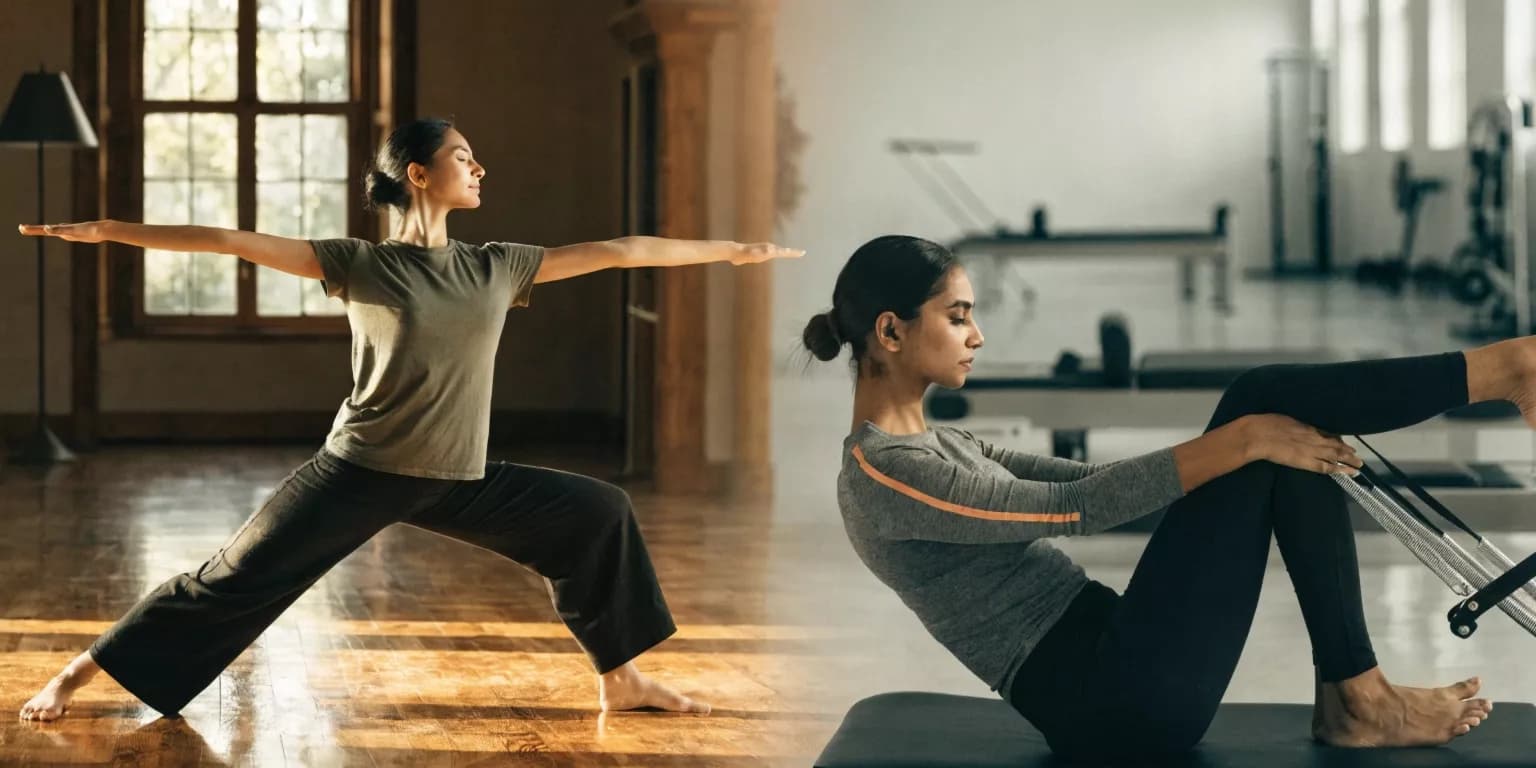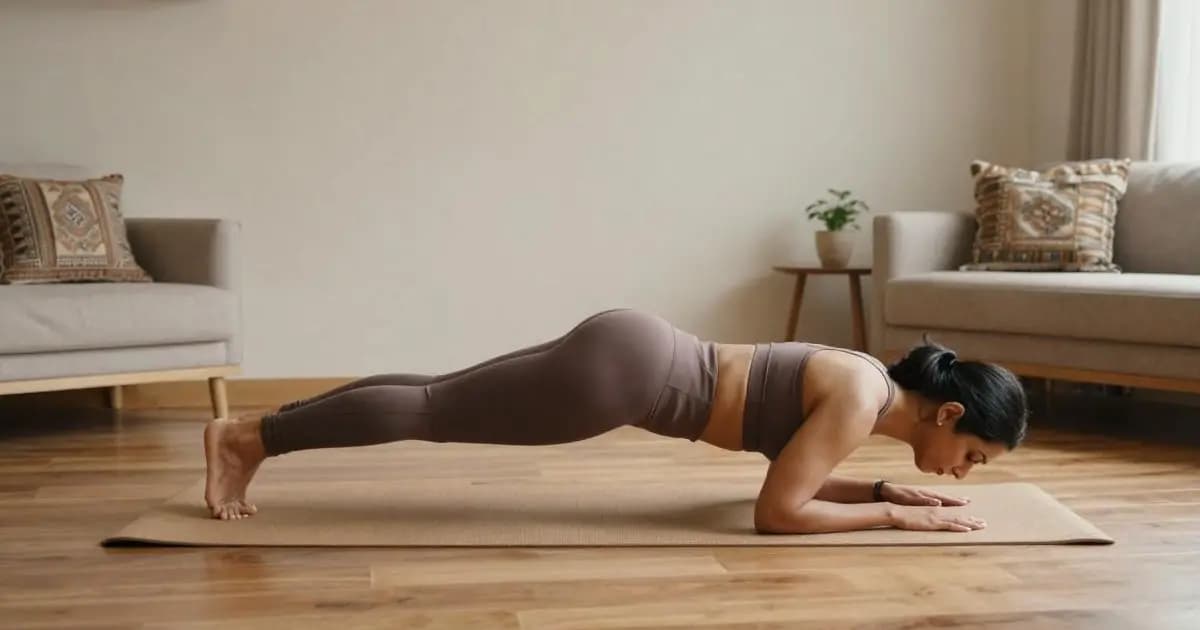
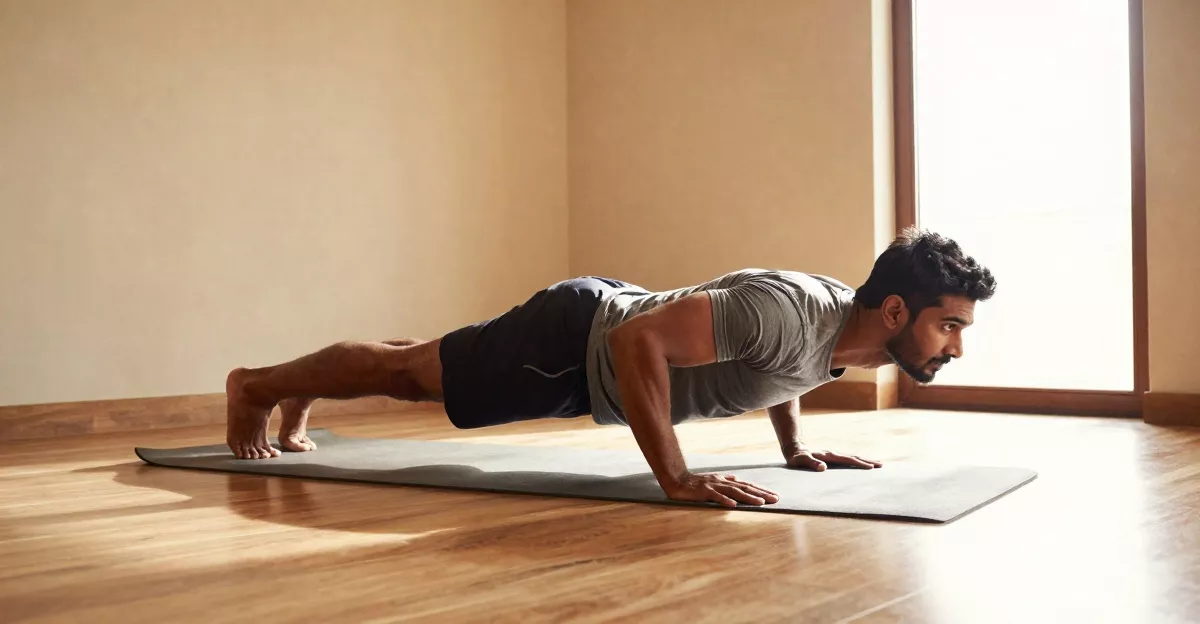
The gym membership you have been meaning to buy. The equipment you will purchase when you have more space. The program you will start when life settles down a little. The perfect conditions that never quite arrive.
Here is the truth that most of the fitness industry has a financial incentive to obscure: you do not need a gym to build significant strength and muscle. You do not need a squat rack, a cable machine, or a pair of adjustable dumbbells that cost more than a month's groceries. You need a floor, enough ceiling height to stand up, approximately two square meters of space, and an understanding of the single principle that governs all muscular development - regardless of whether it happens in a world-class training facility or a Delhi apartment bedroom at 6 AM.
That principle is progressive overload. Everything else is detail.
The Science: Why Bodyweight Training Actually Works
The fitness world has a persistent bias toward external load - the idea that real strength training requires barbells, dumbbells, or resistance machines, and that bodyweight training is a beginner's compromise until you can access "real" equipment. The research does not support this hierarchy.
A comprehensive review published by Harvard Health on the advantages of bodyweight exercise confirmed that bodyweight training builds muscle "independent of an external load" - and that a 10-week bodyweight program produced improvements in seven out of nine physical fitness parameters tested, with the most significant gains in aerobic capacity (33% improvement), core muscle endurance (11%), and lower-body power (6%). These are not marginal improvements. They are the kinds of fitness changes that meaningfully alter daily quality of life and physical capacity.
A 2024 systematic review found that bodyweight trainees showed 12% greater improvements in balance and proprioception compared to machine-based training cohorts - reflecting the superior development of body awareness and movement control that closed-chain, full-body movements produce. MRI studies have confirmed comparable pectoralis major (chest) growth between properly progressed push-up protocols and bench press training over 8-week interventions - the critical variable is not load, but sufficient stimulus relative to current capacity.
A 2025 study published in Frontiers in Physiology on bodyweight interval training found that 18 sessions of bodyweight training produced a 12.5% increase in relative isometric muscular strength alongside significant improvements in cardiovascular fitness - confirming that properly structured bodyweight programs produce real, measurable physical adaptations across multiple fitness domains simultaneously.
The conclusion from the research is unambiguous: bodyweight training works. The limitation is not the modality - it is the absence of the single principle that makes all training work: progressive overload.
Deep Dive
To dive deeper into this topic, read our comprehensive guide: The Beginner's Blueprint to Fitness, Strength & Active Recovery
The One Principle That Governs Everything: Progressive Overload
Progressive overload is the systematic, gradual increase in the demand placed on your muscles over time. It is not specific to barbells. It is not specific to any equipment. It is the fundamental biological requirement for muscular adaptation - the signal to the body that its current capacity is insufficient for the demands being placed on it, and that it must therefore grow stronger.
Without progressive overload, you can exercise indefinitely and produce minimal strength development. Your muscles adapt to a consistent stimulus within 4-6 weeks - after which the same workout maintains your current condition rather than developing it further. The gym beginner who performs the same 3 sets of 10 push-ups for six months will, by month two, be doing maintenance work rather than strength building.
With progressive overload, bodyweight training is a permanent, endlessly developable system of strength development. The methods for applying progressive overload without external weights are more numerous than most beginners realize:
Repetition progression - the most accessible method. Increase the number of reps per set over weeks. 3 sets of 8 push-ups this week, 3 sets of 10 next week, 3 sets of 12 the week after.
Set progression - add sets before adding reps. 3 sets of 10 this week, 4 sets of 10 next week, 5 sets of 10 the week after.
Tempo manipulation - slow the movement to increase time under tension, which is the primary driver of hypertrophy. A push-up performed with a 3-second descent, 1-second pause at the bottom, and 1-second ascent generates dramatically more muscular stimulus than the same movement performed quickly - without changing load, reps, or sets.
Leverage progression - adjust your body position to make the movement harder. Elevated feet push-ups are harder than flat push-ups. Single-leg squats are harder than two-leg squats. Decline push-ups are harder than standard push-ups. Each progression is a load increase achieved through physics rather than added weight.
Range of motion progression - increase depth and range progressively. A deeper squat recruits more muscle fibers and generates more stimulus than a shallow one. Progressing depth over weeks is a legitimate and effective form of progressive overload.
The Movement Foundations: Six Patterns That Build Complete Strength
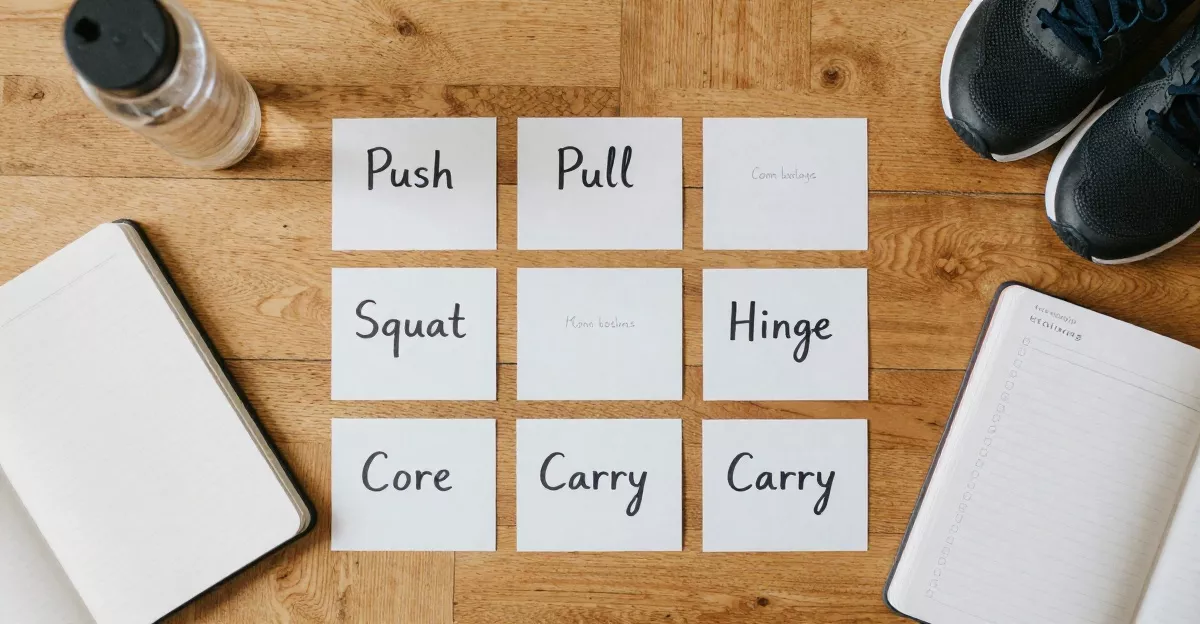
Every effective strength training program - bodyweight or otherwise - is built around fundamental movement patterns rather than individual exercises. Master these six patterns and you have covered every major muscle group in the body with compound movements that develop real-world functional strength.
1. Push (Horizontal) - Chest, Shoulders, Triceps
Beginner: Wall push-up → Incline push-up (hands on chair) → Knee push-up
Intermediate: Standard push-up → Wide push-up → Diamond push-up
Advanced: Decline push-up (feet elevated) → Archer push-up → Pike push-up → Pseudo planche push-up
The push-up, when properly progressed, is one of the most complete upper body strength movements available. EMG studies show that push-ups produce 15-30% greater core muscle activation compared to machine chest press equivalents - making every push-up a partial core strengthening session simultaneously.
2. Pull (Horizontal) - Back, Biceps, Rear Deltoids
The pull is the most challenging pattern to train without equipment because it requires something to pull against. Solutions accessible at home:
Beginner: Doorframe rows (grip both sides of a doorframe, lean back, pull)
Intermediate: Table rows (lie under a sturdy table, grip the edge, pull chest to the surface)
Advanced: Towel-over-door rows → Resistance band rows (a single resistance band, approximately ₹300-500, transforms pull training at home)
Neglecting pulling movements is the single most common error in home training programs - and the fastest route to postural imbalance, shoulder dysfunction, and the rounded-forward posture that hours of desk work already encourages.
3. Squat (Knee-Dominant Lower Body) - Quads, Glutes, Hamstrings
Beginner: Assisted squat (holding a door handle) → Chair squat (sit down, stand up slowly) → Box squat
Intermediate: Bodyweight squat → Pause squat (3-second hold at bottom) → Bulgarian split squat (rear foot elevated)
Advanced: Single-leg squat to chair → Assisted pistol squat → Full pistol squat
The Bulgarian split squat - one leg on a chair behind you, one leg working - is among the most effective unilateral lower body exercises available, producing bilateral leg development, significant glute activation, and hip flexor mobility simultaneously.
4. Hinge (Hip-Dominant Lower Body) - Hamstrings, Glutes, Lower Back
Beginner: Glute bridge → Hip thrust against a sofa → Romanian deadlift with water bottles
Intermediate: Single-leg glute bridge → Nordic hamstring curl (feet anchored under sofa, lower controlled) → Good morning (bodyweight)
Advanced: Single-leg Romanian deadlift → Nordic hamstring curl full → Shrimp squat
The Nordic hamstring curl - kneeling with feet anchored, lowering the torso toward the ground under control - is one of the most potent hamstring strengthening exercises known to sports science, with research confirming significant reductions in hamstring injury risk. It requires no equipment and is brutally challenging.
5. Core (Anti-Extension, Anti-Rotation) - Entire Trunk
Beginner: Dead bug → Bird dog → Plank (20-30 second hold)
Intermediate: Hollow body hold → RKC plank → Plank with alternating reach
Advanced: Ab wheel rollout (from knees) → Full ab wheel rollout → Dragon flag (progression)
The hollow body hold - lying on your back, lower back pressed flat to the floor, arms extended overhead, legs lifted and straight - is the foundation of gymnastics-level core strength and one of the most demanding anti-extension core exercises available without equipment.
6. Carry and Stability - Full Body Integration
Beginner: Single-leg balance holds (30 seconds each side)
Intermediate: Suitcase carry with filled water bottles or backpack
Advanced: Single-leg Romanian deadlift with unstable load → Bear crawl variations
The 12-Week Home Strength Program: Beginner to Intermediate
This program is built around the six movement patterns above, organized into three training days per week with rest or active recovery between sessions. Each week, apply at least one form of progressive overload to at least one exercise.
Phase 1: Foundation (Weeks 1-4)
Focus: Movement quality, building the habit, establishing baselines
Day A (Push + Core)
- Incline push-up: 3 × 8-10
- Pike push-up: 3 × 8
- Tricep dip (using chair): 3 × 8-10
- Plank: 3 × 20-30 seconds
- Dead bug: 3 × 8 each side
Day B (Lower Body + Hinge)
- Assisted squat: 3 × 10-12
- Glute bridge: 3 × 12-15
- Reverse lunge: 3 × 8 each leg
- Single-leg balance: 3 × 30 seconds each side
- Bird dog: 3 × 8 each side
Day C (Pull + Full Body)
- Doorframe row: 3 × 8-10
- Table row: 3 × 8
- Superman hold: 3 × 10
- Hollow body hold: 3 × 15-20 seconds
- Bear crawl: 3 × 10 meters
Rest between sessions: 48 hours minimum. Train Monday-Wednesday-Friday or Tuesday-Thursday-Saturday.
Phase 2: Development (Weeks 5-8)
Focus: Progressive overload applied systematically, movement progression
Upgrade each exercise by one level in the progression hierarchy:
- Incline push-up → Standard push-up
- Assisted squat → Pause squat (3-second hold)
- Glute bridge → Single-leg glute bridge
- Doorframe row → Table row with slow tempo (3-second pull, 3-second lower)
- Plank → RKC plank (actively squeeze every muscle)
- Add 1 set to each exercise (3 sets → 4 sets)
Phase 3: Strength (Weeks 9-12)
Focus: Challenging progressions, higher volume, unilateral dominance
- Standard push-up → Decline push-up or diamond push-up
- Pause squat → Bulgarian split squat
- Single-leg glute bridge → Nordic hamstring curl progression
- Table row → Archer push-up variation or resistance band row
- Hollow body hold → Ab wheel rollout from knees
- Introduce tempo: all exercises performed with 3-second eccentric (lowering) phase
Equipment Worth Investing In - Ranked by Return on Investment
If you can invest in one or two items, these are the highest-return additions to a home training setup:
1. Resistance bands (₹500-1,500 for a set) - The single best value addition to home training. Bands add load to every bodyweight exercise, enable horizontal pulling movements, and provide accommodating resistance (harder at the top, where muscles are strongest) that produces unique training adaptations.
2. Pull-up bar (doorframe mounted, ₹800-2,000) - The second highest-return investment. Pull-ups and their progressions (negatives, assisted, band-assisted) are the most complete upper back and bicep exercise available - and they are essentially impossible to replicate with pure bodyweight without a bar.
3. Gymnastic rings (₹1,500-3,000) - For those who want to progress further. Rings introduce instability that dramatically increases the difficulty and muscle activation of every push and pull movement - a pair of rings suspended from a door pull-up bar transforms the entire upper body progression hierarchy.
What you do not need: expensive resistance machines, a weight bench, a squat rack, or a treadmill. These tools have their place. They are not the foundation.
Nutrition: The Missing Half of the Equation
Training creates the stimulus for muscle growth. Nutrition provides the raw material without which no adaptation occurs regardless of training quality.
Protein is the non-negotiable: the current consensus from exercise science research - including comprehensive guidance from the American College of Sports Medicine's nutrition guidelines for muscle development - is 1.6-2.2 grams of protein per kilogram of bodyweight per day for individuals engaged in regular strength training. For a 70kg person, that is 112-154 grams daily - achievable through dal, paneer, eggs, Greek yogurt, chicken, or plant-based protein sources combined thoughtfully across meals.
Caloric adequacy: muscle building requires a caloric surplus - you cannot build new tissue on a significant caloric deficit. Even a modest 200-300 calorie surplus above your maintenance needs is sufficient for muscle development in beginners, who are uniquely positioned to build muscle and lose fat simultaneously (a phenomenon called "newbie gains" that operates for the first 6-12 months of serious training).
Meal timing: consuming 30-40g of protein within 90 minutes of training takes advantage of the elevated muscle protein synthesis window that follows a training session. For home trainers who train in the morning, this is the post-workout meal. For those who train in the evening, a protein-rich dinner serves this function.
The Most Important Thing Nobody Tells Beginners
Consistency across months matters infinitely more than perfection in any single session. The beginner who trains three times per week at 80% effort for 52 weeks will build more strength than the person who trains at 100% effort for six weeks and burns out.
The body adapts to a consistent stimulus. The brain builds a habit through consistent repetition. The confidence that enables harder training grows from consistent experience of showing up. Every variable in the muscle-building equation - physiological adaptation, neural recruitment, movement skill, psychological resilience - improves not from intensity spikes but from reliable, progressive, long-term exposure.
Start with the simplest version of the program. Execute it with reasonable effort and genuine consistency. Apply progressive overload every week without exception. And trust the process that has been building human strength for as long as humans have moved their own bodies against gravity - which is, as it turns out, the entire history of our species.