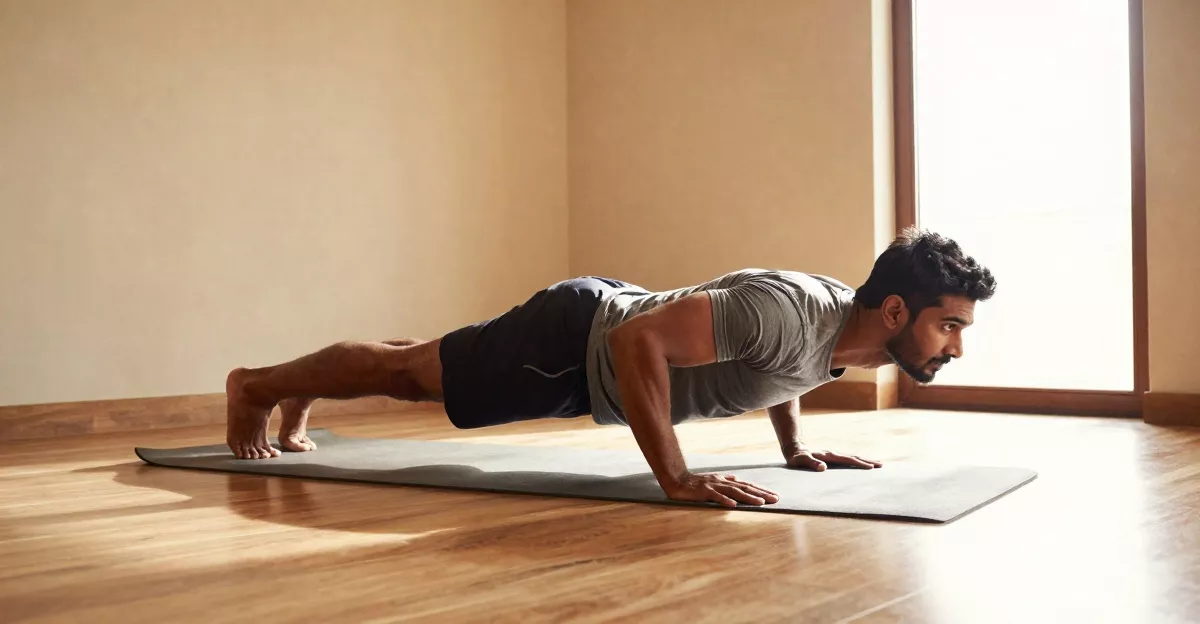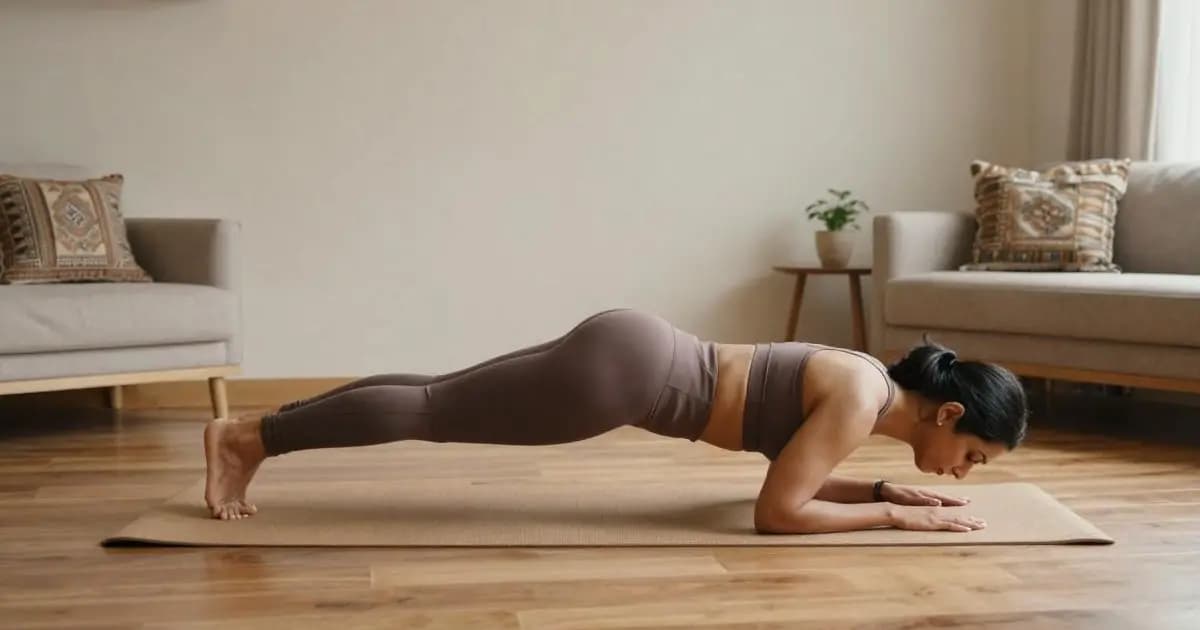
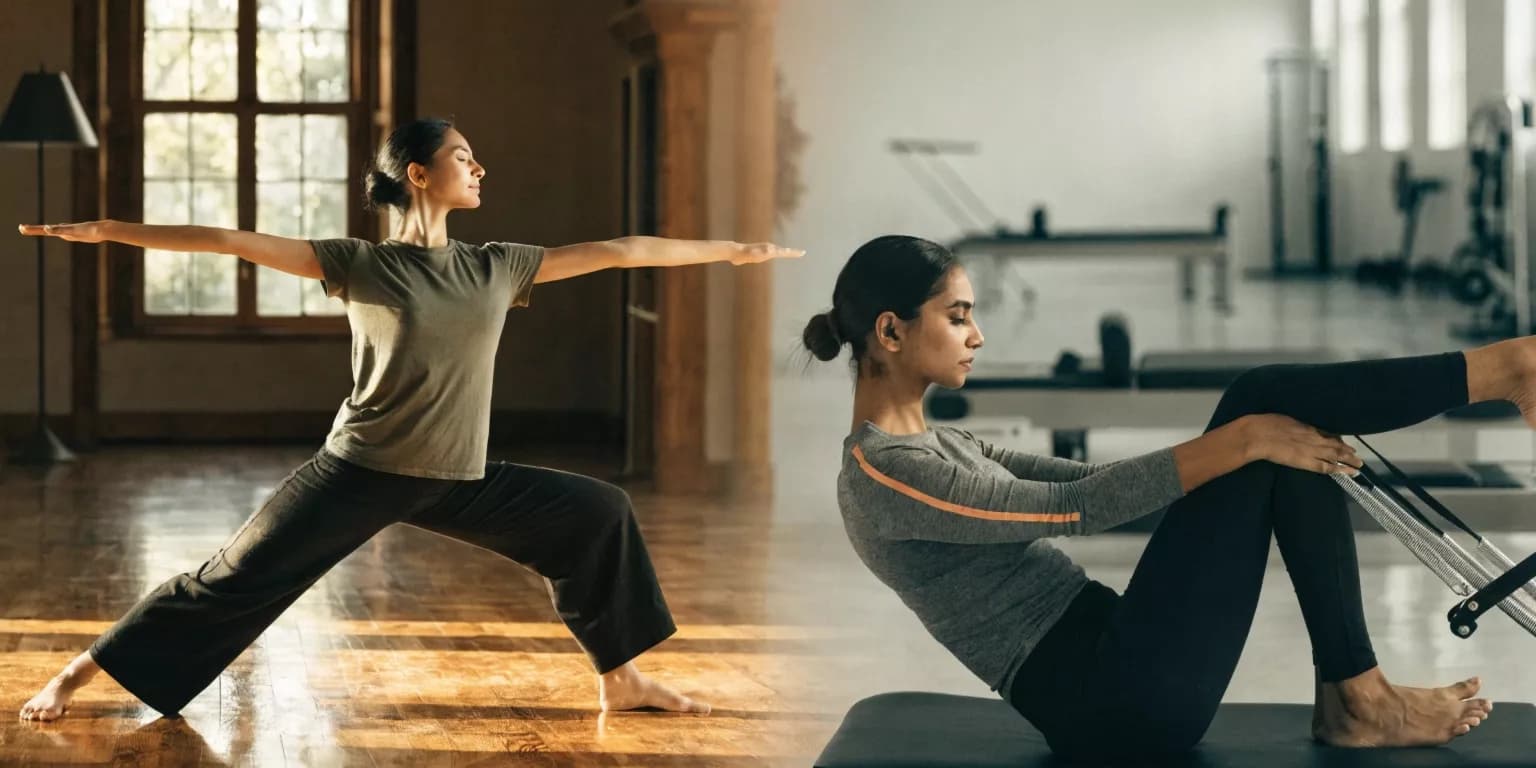
Picture two people walking out of a gym on the same Tuesday morning. One emerges quietly glowing - unhurried, centered, carrying the particular calm that only comes from an hour of deliberate stillness and breath. The other walks out standing noticeably taller, core engaged, moving with a precision and physical awareness that wasn't there an hour ago. Both had a great workout. Both feel genuinely better. Neither did the same thing.
One practiced yoga. The other, Pilates.
From the outside, the two disciplines look almost identical - mats on the floor, controlled movement, focused breathing, an absence of heavy weights or loud music. But underneath that surface resemblance, they are built on fundamentally different philosophies, train the body through different mechanisms, and tend to produce meaningfully different outcomes. Understanding those differences is not just an academic exercise. It is the difference between choosing a practice you will sustain for decades and choosing one you abandon in six weeks because it simply wasn't right for what you actually needed.
Where They Come From: Philosophy Matters More Than You Think
Yoga is approximately 5,000 years old. It originated in ancient India as a complete philosophical and spiritual system - the physical postures (asanas) that most Westerners recognize as "yoga" represent just one of its eight limbs, which also include breathwork (pranayama), ethical principles, meditation, and the pursuit of spiritual liberation. The body, in yoga's framework, is not the destination - it is the vehicle. Movement exists in service of something larger: the integration of body, mind, and consciousness.
This origin matters practically. Even in a secular, studio-based yoga class, you are working within a tradition that values presence, surrender, and awareness as much as physical outcome. Poses are held. The breath is the anchor. The nervous system is explicitly part of the practice.
Pilates has an entirely different origin story. It was developed in the early 20th century by Joseph Pilates - a German-born gymnast, boxer, and self-defense instructor who began developing his method while interned in England during World War I, using springs attached to hospital beds to help rehabilitate injured soldiers. He called his system "Contrology" - the art of controlled movement. Pilates is a precision exercise system designed to strengthen the deep stabilizing muscles of the core, correct postural imbalances, and create efficient, controlled movement patterns. It has no spiritual dimension. It is biomechanically and anatomically grounded from its foundations.
Deep Dive
To dive deeper into this topic, read our comprehensive guide: The Beginner's Blueprint to Fitness, Strength & Active Recovery
What Each Practice Actually Does to Your Body?
This is where the practical differences become most significant - and where most comparison articles either oversimplify or get it wrong.
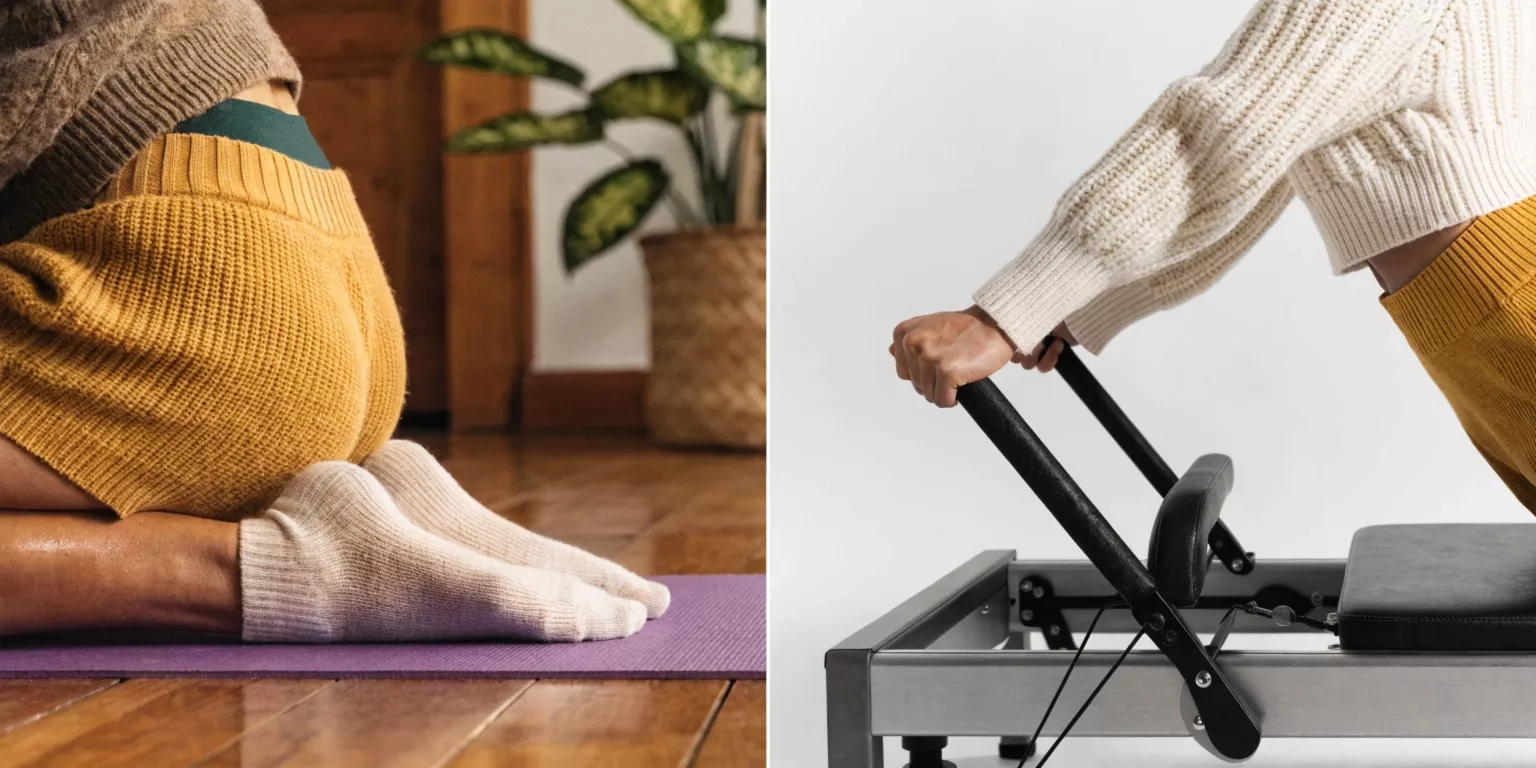
Yoga's primary physical outcomes - supported by decades of research including multiple studies in the International Journal of Yoga - include improved flexibility across the full range of joints, enhanced balance and proprioception, measurable reductions in cortisol and blood pressure, and improved respiratory function through pranayama. The National Institutes of Health's National Center for Complementary and Integrative Health has documented yoga's evidence base for managing chronic low back pain, anxiety, insomnia, and stress-related conditions - making it one of the most research-validated complementary health practices available.
What yoga does less effectively, on its own, is build the kind of targeted core stability and postural correction that Pilates specifically addresses. Many people who practice yoga develop impressive flexibility without developing the deep spinal stabilizers - the transversus abdominis, multifidus, and pelvic floor - that protect the spine under load and produce the posture improvements they are hoping for.
Pilates' primary physical outcomes are almost the inverse. A 2024 systematic review published in ScienceDirect analyzing multiple controlled trials confirmed that Pilates significantly improves body posture, spinal alignment, and core muscle activation patterns. A 2025 review in a European journal of health sciences found that Pilates produces positive effects on musculoskeletal function, neurological rehabilitation, and injury prevention - making it particularly valuable as a rehabilitation and injury-prevention tool. The American Council on Exercise notes that Pilates is one of the few exercise modalities specifically designed to train the deeper stabilizing muscles that conventional gym exercise often bypasses entirely.
Where Pilates historically underdelivered - at least in popular perception - was in its mental and emotional health outcomes. That perception is now being revised by research. A 2025 study published in PMC (National Library of Medicine) found that even a once-weekly Pilates program for three months produced significant reductions in anxiety, depression, and somatization compared to an inactive control group. A separate 12-week Pilates study confirmed reduced stress levels, improved sleep quality, and reduced fatigue in the experimental group. Pilates, it turns out, is considerably more than a core workout.
The Mental Health Dimension: Closer Than You'd Expect
Both practices, when done consistently, produce meaningful mental health benefits - but through different pathways.
Yoga's mental health benefits are relatively well understood. The explicit integration of pranayama (breathing practice) activates the parasympathetic nervous system - directly reducing cortisol, lowering heart rate, and shifting the body out of fight-or-flight mode. The meditative dimension of yoga - holding poses with sustained attention, returning focus to breath when the mind wanders - is essentially mindfulness training embedded in movement. This is why yoga has the stronger evidence base for anxiety, PTSD, and stress-related conditions specifically.
Pilates works differently. The intense concentration required to execute precise movements - engaging the correct muscles in the correct sequence, maintaining neutral spine, coordinating breath with movement - creates a form of moving meditation that is highly effective for individuals who find seated stillness difficult. The focus demanded by Pilates leaves no cognitive bandwidth for rumination. The mind empties not through stillness but through precision.
If you struggle to sit still and find traditional meditation frustrating, Pilates may actually be the more accessible route to mental clarity.
Styles, Variations, and What to Expect in a Real Class
Neither yoga nor Pilates is a single thing - and knowing the major variations helps you choose more intelligently.
Yoga styles and their distinct characters:
- Hatha: Slow, accessible, foundational - ideal for beginners or those seeking gentle movement and stress relief
- Vinyasa / Flow: Dynamic, breath-synchronized sequences - builds cardiovascular fitness and flexibility simultaneously
- Ashtanga: Rigorous, structured, physically demanding - for those who want athletic challenge within a traditional framework
- Yin: Long-held passive poses targeting connective tissue - the most meditative and deeply restorative style
- Iyengar: Alignment-focused, prop-heavy - excellent for injury rehabilitation and postural correction within a yoga framework
- Bikram / Hot Yoga: Practiced in heated rooms - amplifies flexibility gains but requires careful hydration
Pilates variations:
- Mat Pilates: Body-weight only, floor-based - most accessible and affordable entry point
- Reformer Pilates: Uses a spring-resistance machine (the Reformer) - more challenging, more precise, significantly more expensive, and now one of the fastest-growing fitness categories globally
- Clinical Pilates: Delivered by physiotherapists for injury rehabilitation - the most medically rigorous application
The Practical Decision: A Direct Comparison
Rather than declaring a winner - there isn't one - here is an honest framework for choosing:
Choose yoga if you:
- Want to improve flexibility, balance, and overall body awareness
- Are managing anxiety, chronic stress, insomnia, or stress-related conditions
- Are drawn to a practice with philosophical or spiritual depth
- Prefer variety, creativity, and a practice that changes significantly across styles
- Are a complete beginner - Hatha yoga is one of the most accessible entry points in all of fitness
Choose Pilates if you:
- Have a specific postural problem, back pain, or are recovering from injury
- Want to build core strength and spinal stability specifically
- Prefer precise, technical instruction and measurable progress in movement quality
- Find seated meditation frustrating and respond better to focus through movement
- Are a dancer, runner, or athlete wanting to improve movement efficiency and reduce injury risk
Do both if you:
- Want comprehensive physical development - flexibility, strength, stability, and mindfulness together
- Can afford two practices (financially and in terms of time)
- Have already established one and want to address the gaps it leaves
The global wellness industry is increasingly recognizing that yoga and Pilates are complementary rather than competitive - as reflected in the projected $269 billion global market for yoga and Pilates studios, driven largely by people who have discovered that each practice fills what the other leaves incomplete.
The Honest Answer
There is no objectively superior practice. There is only the practice that is right for you, right now, for the goals you actually have - not the goals you think you should have.
If your lower back has been quietly complaining for years and you move through daily life with the posture of someone who has spent a decade at a laptop, Pilates will likely change your life faster than yoga will. If you are running on stress, sleeping badly, and feel disconnected from your own body, yoga's nervous system regulation and meditative qualities may be exactly what your biology is asking for.
The best practice is not the one with the superior evidence base or the more fashionable studio. It is the one you will actually show up for - consistently, over months and years - because it gives you something that genuinely matters to you. Start there.