There is a spice sitting in almost every Indian kitchen right now that has more clinical research behind it than most pharmaceutical anti-inflammatory drugs on pharmacy shelves. It costs a fraction of those drugs. It has been used safely for over 3,000 years. And for the vast majority of that time, science either ignored it or treated it with the polite skepticism reserved for things that seem too simple to be genuinely powerful.
That changed. In the last two decades, turmeric - and specifically its primary active compound, curcumin - has become one of the most intensively studied natural compounds in biomedical research, with over 165 clinical studies completed and more ongoing each year. What those studies have confirmed is both remarkable and, in many ways, exactly what Ayurvedic practitioners have maintained all along: that this golden-orange rhizome contains one of the most potent, multi-targeted anti-inflammatory agents found in nature.
Here is what the science actually says - including the parts that are nuanced, the parts that are genuinely exciting, and the critically important practical detail that determines whether the turmeric in your kitchen is actually reaching your bloodstream at all.
What Is Curcumin - and How Does It Differ from Turmeric?
This distinction matters enormously and is consistently misunderstood.
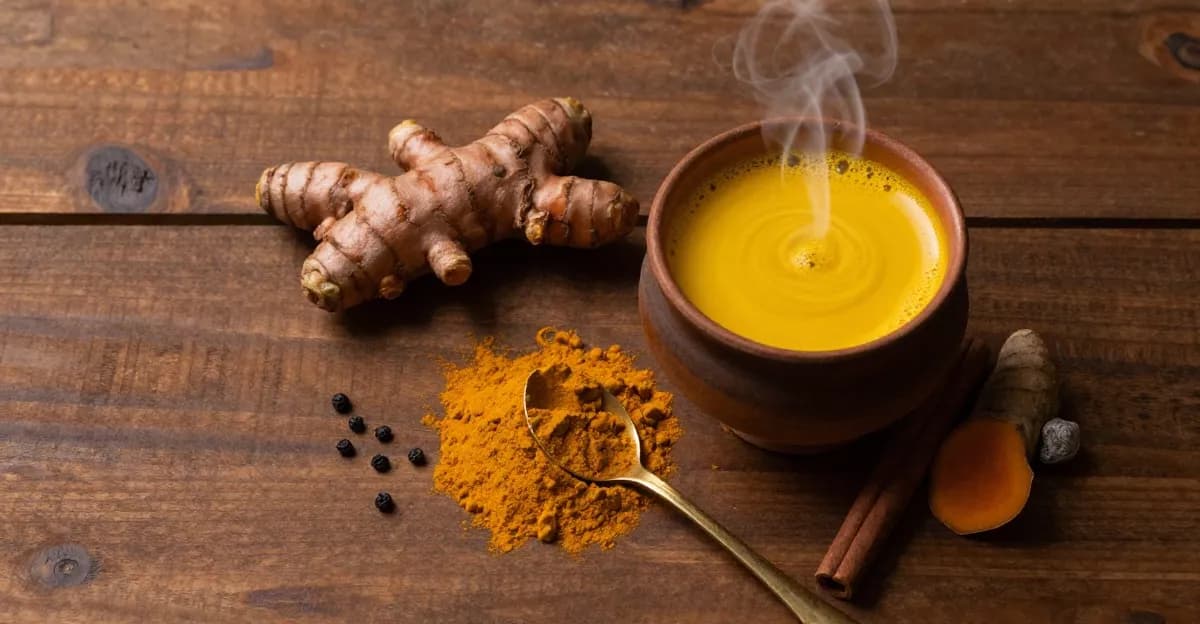
Turmeric (Curcuma longa) is the whole plant root - the rhizome that is dried and ground into the vivid orange-yellow powder used in curries, dals, and golden milk across South and Southeast Asia. It contains hundreds of bioactive compounds including volatile oils, turmerones, and a family of polyphenols collectively called curcuminoids.
Curcumin is the most studied of those curcuminoids - and the one responsible for the majority of turmeric's therapeutic effects. Here is the important catch: curcumin constitutes only approximately 2-5% of dried turmeric powder by weight. A teaspoon of turmeric contains roughly 100-200mg of actual curcumin - a meaningful amount for culinary and general wellness use, but potentially insufficient for targeted therapeutic effects against specific conditions, which is why standardized supplements exist.
Curcumin's pharmacological profile is extraordinarily broad. As reviewed by the National Center for Complementary and Integrative Health (NCCIH), it acts simultaneously as an antioxidant, anti-inflammatory, antimicrobial, and neuroprotective agent - and it influences over 100 molecular pathways involved in inflammation, cell signaling, and oxidative stress. This multi-target mechanism is precisely why researchers find it so interesting: unlike pharmaceutical drugs designed to hit a single target, curcumin modulates the entire inflammatory network simultaneously.
Deep Dive
To dive deeper into this topic, read our comprehensive guide: The Everyday Guide to Natural Remedies & Holistic Healing
The Anti-Inflammatory Mechanism: How Curcumin Works
To understand why curcumin is so clinically significant, you need to understand the molecular mechanism it targets - and why that target is so important.
NF-κB (Nuclear Factor kappa B) is a protein complex that functions as a master switch for the inflammatory response. When activated - by injury, infection, stress, or environmental toxins - NF-κB enters the cell nucleus and switches on the genes that produce pro-inflammatory cytokines (including IL-6, TNF-α, and IL-1β), which drive the redness, swelling, pain, and tissue damage of acute inflammation. In chronic inflammation - the low-grade, persistent version now recognized as a driver of cardiovascular disease, diabetes, Alzheimer's disease, and most cancers - NF-κB is chronically overactivated, keeping the inflammatory response switched on when it should have resolved.
Curcumin is one of the most potent natural inhibitors of NF-κB identified in research to date. It blocks NF-κB activation through multiple pathways simultaneously - preventing it from entering the nucleus, disrupting its DNA binding capacity, and reducing the expression of the inflammatory cytokines it would otherwise produce. This is not a single pharmaceutical mechanism. It is a broad-spectrum modulation of the body's primary inflammatory signaling network.
Beyond NF-κB, curcumin also inhibits COX-2 (cyclooxygenase-2) - the same enzyme targeted by ibuprofen and other NSAIDs - and reduces 5-LOX (5-lipoxygenase), another pro-inflammatory enzyme. It simultaneously increases the activity of Nrf2, the master regulator of antioxidant defense. The result is an anti-inflammatory effect that operates through at least four distinct molecular pathways - which is both why it works broadly and why it is difficult to study with the simple single-target methodology of conventional pharmacology.
What the Clinical Research Actually Shows
The clinical evidence for curcumin has grown considerably in depth and quality over the last decade. A 2025 meta-analysis reviewed in Semantic Scholar found that curcumin is a safe medicinal agent that improves multiple clinical outcomes - confirming statistically significant reductions in inflammatory biomarkers including CRP (C-reactive protein), IL-6, and TNF-α across multiple randomized controlled trials.
Osteoarthritis and joint pain represents the strongest and most consistent evidence base. A meta-analysis of 10 randomized controlled trials - 8 of which had high methodological quality - showed that curcumin supplementation improved both pain and joint function in osteoarthritis patients. More strikingly, several trials found curcumin comparable in effectiveness to NSAIDs like diclofenac and ibuprofen for pain reduction, with 12% fewer adverse events - meaning it worked as well as the pharmaceutical standard with fewer side effects. According to Arthritis Foundation's curcumin research summary, curcumin is one of the few natural compounds they formally recognize as having meaningful clinical evidence for arthritis symptom management.
Inflammatory bowel disease has shown particularly dramatic results in pilot trials. In one study, over 50% of patients with ulcerative colitis who took curcumin achieved remission after 4 weeks - compared to zero in the placebo group. While larger confirmatory trials are needed, this is a striking preliminary finding in a condition that is notoriously difficult to treat.
Metabolic health and cardiovascular risk is an emerging evidence area. A 2025 study published in PMC found that turmeric supplementation - particularly when combined with piperine - significantly improved lipid profiles in adults with metabolic disorders, reducing total cholesterol, LDL, and triglycerides while improving HDL. The dual mechanism involves curcumin's anti-inflammatory effects on arterial walls alongside piperine's independent activation of PPAR-α and PPAR-γ - transcription factors central to lipid metabolism.
Cognitive health and depression represent a genuinely exciting frontier. Multiple human trials have found curcumin reduces symptoms of depression - with one randomized controlled trial finding it equivalent to Prozac (fluoxetine) in reducing depression scores at 6 weeks. The mechanism appears to involve increases in BDNF (Brain-Derived Neurotrophic Factor), the growth factor that supports neuronal health and is consistently depleted in depression.
The Bioavailability Problem - and How to Solve It
Here is the most important practical piece of information about curcumin - and the reason why eating turmeric-spiced food alone may not deliver the therapeutic doses demonstrated in clinical research.
Curcumin is famously poorly absorbed in isolation. It is rapidly metabolized and excreted before reaching systemic circulation in meaningful concentrations. Studies administering plain curcumin show negligible blood levels - the compound is broken down so quickly in the gut and liver that very little actually reaches the tissues where it needs to work. This is the fundamental limitation that has hampered curcumin research for decades and led some early reviewers to dismiss its potential despite compelling in-vitro results.
The solution lies in a few well-studied approaches:
1. Piperine - the black pepper solution:
Piperine - the alkaloid that gives black pepper its heat - inhibits the liver and intestinal enzymes responsible for curcumin's rapid breakdown, increasing its bioavailability by approximately 2,000% according to pharmacokinetic research. A 2024 PMC study confirmed that co-administration of curcumin and piperine significantly enhances serum curcumin concentration and extent of absorption. This is the scientific basis for the ancient Indian practice of adding black pepper to turmeric preparations - a food pairing that long predates the biochemistry explaining why it works.
The practical implication: always combine turmeric with black pepper. In supplement form, look for BioPerine (standardized piperine) at 5-20mg per dose. In cooking, a generous pinch of freshly ground black pepper in every turmeric-containing dish meaningfully improves absorption.
2. Fat co-administration:
Curcumin is fat-soluble - it requires dietary fat for intestinal absorption. Consuming turmeric with a source of healthy fat (coconut milk, ghee, olive oil, or whole milk) significantly improves bioavailability compared to consuming it with water or a low-fat meal. Traditional golden milk made with whole milk and ghee is, once again, empirically well-justified by modern pharmacology.
3. Phospholipid complexes and nanoparticle formulations:
For therapeutic supplementation, Meriva (curcumin-phosphatidylcholine complex) and Theracurmin (nanoparticle curcumin) have demonstrated dramatically enhanced bioavailability in human studies - 29x and 27x respectively compared to standard curcumin powder. These patented forms are available in premium supplement products and are worth seeking specifically when using curcumin for targeted therapeutic purposes rather than general wellness.
How to Use Turmeric and Curcumin Effectively
For daily wellness and prevention (culinary use):
- Add ½-1 teaspoon of turmeric to cooking daily - dals, curries, scrambled eggs, rice, soups
- Always pair with freshly ground black pepper and a fat source
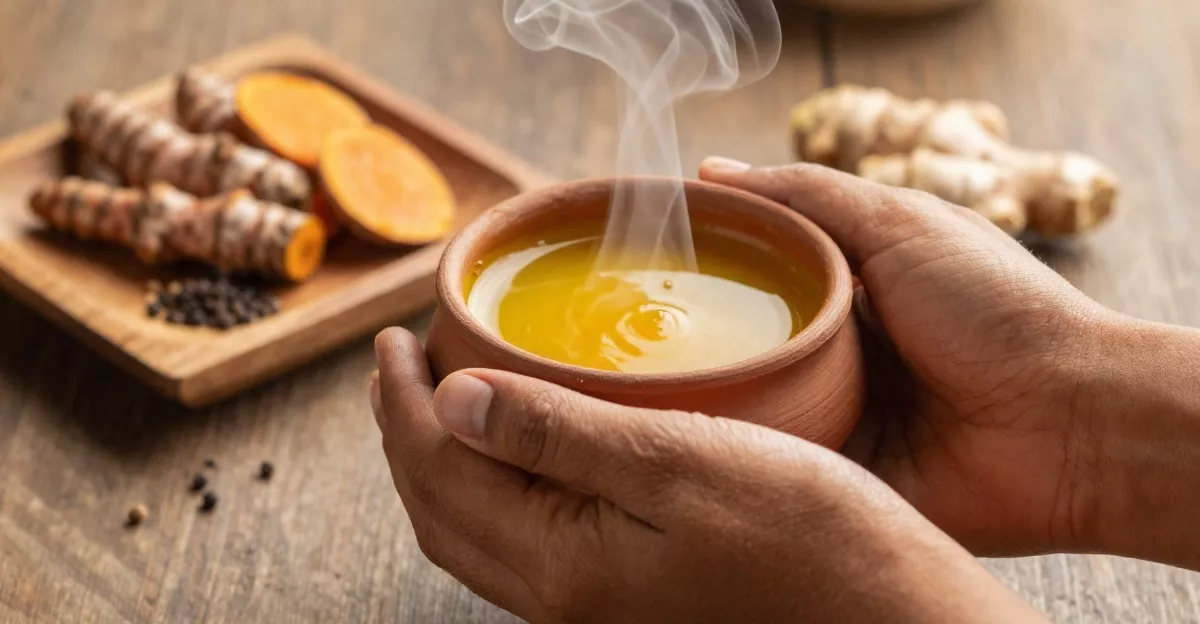
- Golden milk: Heat 250ml whole milk with ½ tsp turmeric, ¼ tsp black pepper, ¼ tsp cinnamon, ½ tsp ghee, and raw honey to taste. The most bioavailable and delicious daily delivery system for curcumin
- Turmeric-ginger tea: Simmer fresh turmeric root (or ½ tsp powder) with fresh ginger in water for 10 minutes - adds gingerol (ginger's anti-inflammatory compound) for a synergistic anti-inflammatory effect
For targeted therapeutic use (supplementation):
According to NCCIH's clinical review of curcumin safety and dosing, curcumin supplements are generally considered safe at doses up to 8 grams per day in short-term trials, with no serious adverse effects reported at standard supplemental doses. Practically recommended therapeutic dosing:
- 500-1,000mg of standardized curcumin extract (95% curcuminoids) per day
- Combined with 5-20mg BioPerine (piperine) or in a phospholipid complex form
- Split across two doses for sustained blood levels
- Taken with a meal containing fat
Cautions:
- Curcumin has mild blood-thinning properties - consult your physician if you are on anticoagulant medications (warfarin, aspirin therapy) before supplementing at high doses
- Large doses may cause gastrointestinal discomfort in sensitive individuals - start with a lower dose and increase gradually
- Curcumin can enhance the effects of some chemotherapy drugs - an important interaction to discuss with an oncologist if relevant
Synergistic Combinations That Amplify Curcumin's Effects
Curcumin works well in combination with several other natural compounds - an approach rooted both in traditional Ayurvedic polypharmacy and increasingly supported by modern research:
- Curcumin + Boswellia (Shallaki): Both inhibit inflammatory pathways - curcumin via NF-κB and COX-2, boswellic acids via 5-LOX. Multiple clinical trials confirm the combination outperforms either compound alone for osteoarthritis and inflammatory bowel conditions
- Curcumin + Ginger: Gingerol and shogaol in ginger inhibit the same COX and LOX enzymes as curcumin - a genuinely additive anti-inflammatory pairing
- Curcumin + Quercetin: Both modulate NF-κB while quercetin adds mast cell stabilization and antiviral properties - a synergistic combination for inflammatory and allergic conditions
- Curcumin + Vitamin D: Emerging research suggests curcumin may enhance Vitamin D receptor sensitivity - particularly relevant given that the majority of urban Indians are Vitamin D deficient
The Tradition Was Right
There is something quietly profound about the fact that 3,000 years of Ayurvedic wisdom regarding turmeric has been systematically confirmed - mechanism by mechanism, pathway by pathway - by modern biomedical science. The ancient practitioners did not know about NF-κB inhibition or COX-2 suppression. But they understood, through observation across generations, that this golden root reduced pain, swelling, and infection - that it healed from the inside out.
The modern contribution is not the discovery of turmeric's power. It is the understanding of precisely how that power works - which allows us to use it more intelligently, more consistently, and more effectively than ever before.
The golden spice in your kitchen is not folk medicine. It is pharmacology. Use it accordingly.