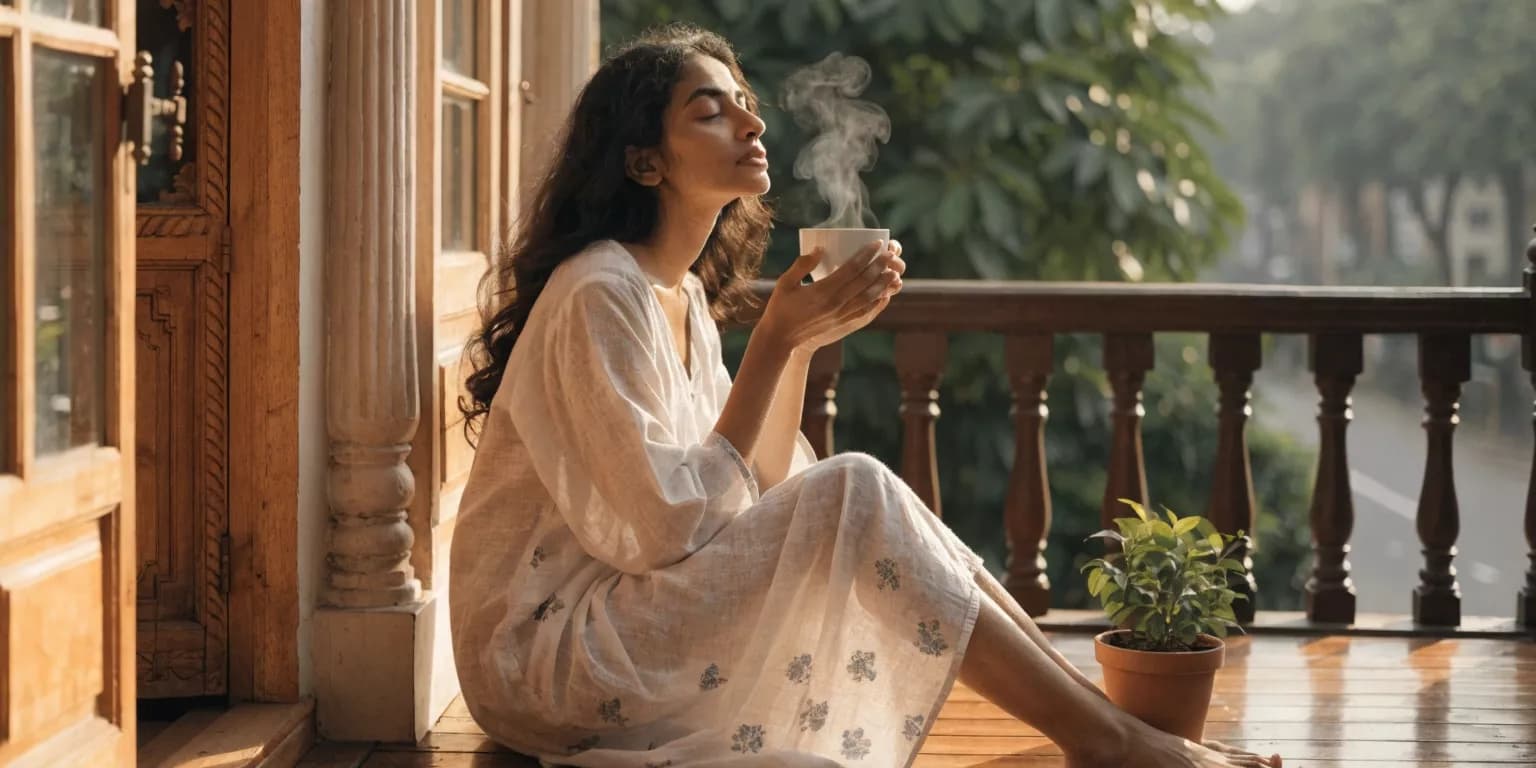
There is a particular kind of exhaustion that has nothing to do with how many hours you slept last night. It is the exhaustion of a life lived at perpetual maximum speed - of days that begin with an alarm and a phone and end with a screen and a to-do list that somehow grew longer than when the day started. It is the exhaustion of being constantly available, constantly productive, constantly optimizing - and yet feeling, underneath it all, like you are missing something essential.
Most people feel this. Few can name it precisely. And almost nobody was taught how to fix it, because the culture surrounding us does not consider it a problem to be fixed. It considers it the price of ambition. The cost of relevance. The proof that you are trying hard enough.
Slow living says otherwise.
What Slow Living Actually Is - and What It Isn't?
Before anything else, slow living needs to be rescued from its Instagram aesthetic. The hashtag #slowliving has accumulated over six million uses on the platform - and the majority of those posts depict linen curtains, countryside cottages, sourdough starters, and artfully poured morning coffee. It is beautiful. It is also a profound misrepresentation of what the movement is actually about.
Slow living is not a visual style. It is not the exclusive domain of people who can afford to quit their jobs and move to rural Provence. It is not even specifically about doing things slowly, in a literal sense. As the Slow Living LDN community defines it - one of the most thoughtful repositories of the movement's philosophy - slow living is "a mindset whereby you curate a more meaningful and conscious lifestyle that's in line with what you value most in life". It is about switching off autopilot. About making deliberate choices rather than being swept along by default settings that someone else designed for you.
The movement has intellectual roots that predate Instagram by decades. Its modern origin is typically traced to Carlo Petrini's Slow Food movement, which began in Italy in 1989 as a protest against the opening of a McDonald's near the Spanish Steps in Rome - and rapidly evolved into a global philosophy of conscious consumption, seasonal eating, and the preservation of culinary culture. From food, the "slow" philosophy spread into urban planning (Slow Cities), parenting (Slow Parenting), education, travel, and eventually lifestyle design as a whole. Author Carl Honoré crystallized the modern slow living philosophy in his 2004 book In Praise of Slow - still one of the most important texts in the movement - arguing that the compulsive acceleration of modern life is a form of collective madness that is making us physically ill, mentally depleted, and spiritually hollow.
Two decades later, the evidence has only grown more compelling.
Deep Dive
To dive deeper into this topic, read our comprehensive guide: The Complete Guide to Healthy Habits & Intentional Living
The Real Cost of Fast Living
The data on hustle culture's human cost is no longer ambiguous. A 2025 report found that 75% of employees report experiencing low mood, nearly 40% have cried at work in the past month, and almost half say life feels harder now than it did during the pandemic. The WHO classifies burnout as an occupational phenomenon - chronic workplace stress that has not been successfully managed - with an estimated $1 trillion annually lost in global productivity as a direct consequence.
But the cost of chronic speed extends beyond professional burnout. Research compiled by the American Psychological Association consistently links slower daily rhythms with reduced anxiety, lower cortisol, better sleep quality, and improved emotional regulation. Neuroscientist Marc Wittmann's research at the Institute for Frontier Areas of Psychology found that people who live mindfully - who are present rather than perpetually rushed - experience time as literally expanding: they feel they have more of it, not less. The cruel irony of hustle culture is that in the desperate pursuit of doing more with every hour, the hours themselves begin to disappear faster. Slow living, paradoxically, gives you back time.
Psychology Today notes that by living slowly, we experience significantly more of reality - presence creates richness, and rushing creates the sensation of life blurring past rather than being genuinely inhabited.
The Principles That Define a Slow Life
Slow living is not a set of rules. It is a reorientation of values - a shift in what you use to measure a good day, a good week, a good life. Several principles tend to anchor it across cultures and contexts:
Quality over quantity. This applies to almost everything: relationships (fewer, deeper connections rather than a wide, shallow social network), possessions (things you genuinely use and love rather than things you merely accumulate), experiences (fully inhabiting fewer things rather than half-experiencing many). The Japanese concept of mono no aware - the bittersweet appreciation of impermanence and the beauty of things precisely because they do not last - is slow living's philosophical cousin.
Presence over productivity. A slow living approach asks a genuinely radical question about your daily activities: are you present for them? The meal you ate while scrolling through your phone did not nourish you in the way a meal eaten with attention does - not just psychologically but physiologically, because the parasympathetic nervous system required for optimal digestion is not active when you are simultaneously processing a social media feed.
Meaning over metrics. Hustle culture measures a life in outputs - promotions earned, followers gained, revenue generated, goals checked off. Slow living measures a life in meaning - in the quality of relationships, the depth of experience, the alignment between how you spend your hours and what you actually care about. These are harder to quantify. They are also harder to ignore when they are absent.
Rhythm over reaction. Fast living is fundamentally reactive - you respond to whatever demands your attention, in the order it demands it, for as long as it holds it. Slow living is rhythmic - structured around natural cycles of effort and rest, engagement and withdrawal, output and replenishment.
What Slow Living Looks Like in Practice?
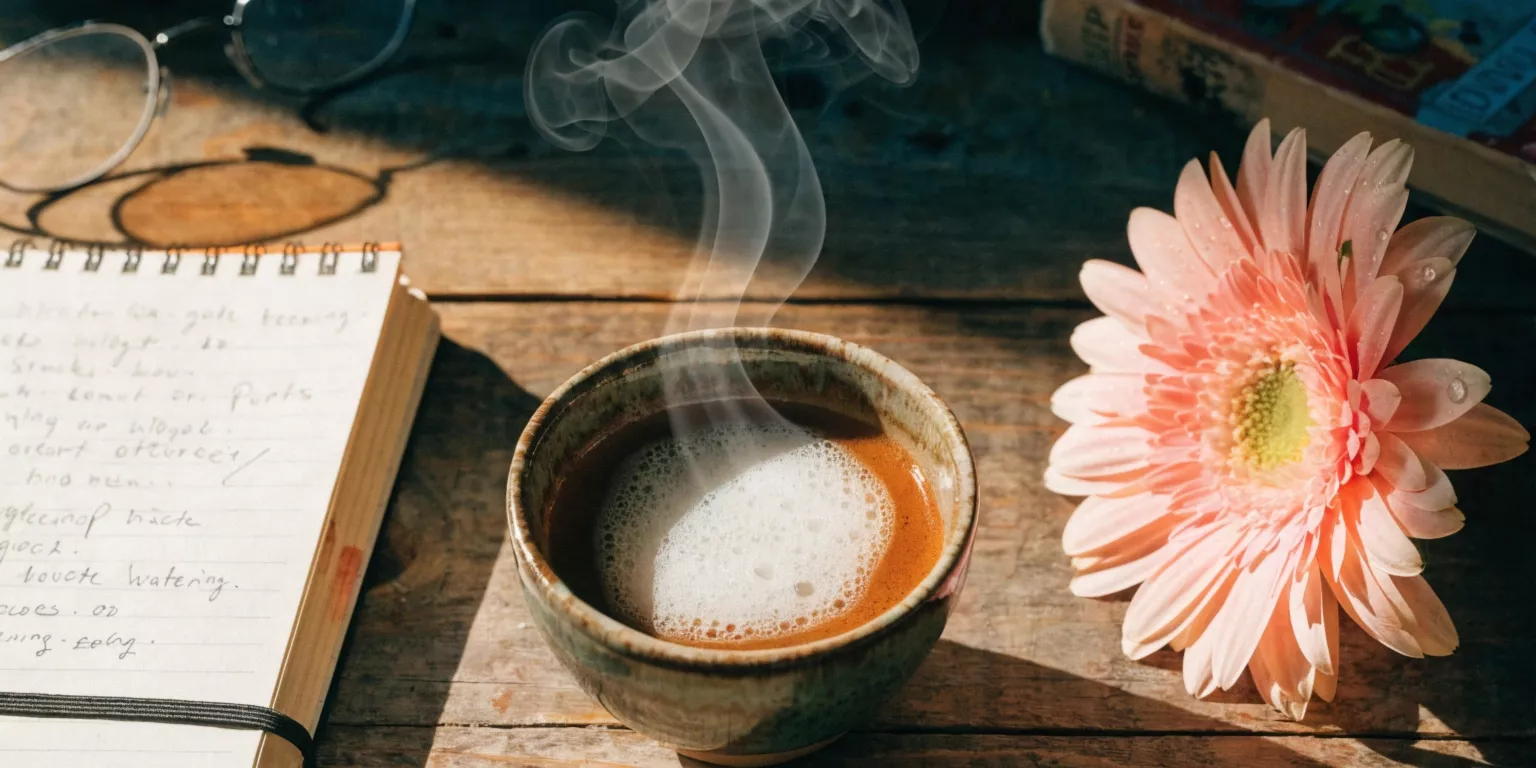
This is where the philosophy has to land in the actual texture of daily life - otherwise it remains an aspiration rather than a practice. And the good news is that slow living does not require a countryside cottage or a lifestyle redesign. It can begin in the smallest moments of an ordinary day.
The slow morning. The first 30-60 minutes of your day are where fast and slow living diverge most sharply. The fast morning begins with a phone - notifications, news, social media, email - before the body has fully transitioned from sleep. The slow morning begins with the body: a glass of water, natural light, a few minutes of quiet. No inputs until you have had a few minutes to simply exist. This single change - delaying phone engagement by 30 minutes each morning - has been shown to measurably reduce morning cortisol and improve the emotional tone of the entire day that follows.
Single-tasking as rebellion. In a culture that celebrates multitasking as a badge of competence, doing one thing at a time is a quietly radical act. Close the extra tabs. Put the phone in another room. Eat the meal without the podcast. Have the conversation without half-monitoring your inbox. Not because multitasking is always wrong - but because the compulsive inability to do one thing at a time is a symptom of a nervous system that has forgotten what rest feels like.
The slow meal. Food is one of the most immediate and accessible portals into slow living. The Japanese practice of hara hachi bu - eating to 80% fullness - only works if you are eating slowly enough to register satiety signals, which take approximately 20 minutes to reach the brain from the gut. Beyond digestion, a slow meal is an act of presence: tasting what you are eating, noticing the company you are in, recognizing that this unremarkable Tuesday lunch is, in fact, a moment of actual life.
Chosen boredom. One of slow living's most counterintuitive prescriptions is to protect periods of unstructured time - time with no agenda, no productivity, no entertainment. The brain's Default Mode Network, which activates during rest and mind-wandering, is responsible for creative insight, long-term planning, and emotional processing. Chronically eliminating boredom through constant stimulation does not make you more productive. It depletes the cognitive resources that make genuine productivity possible.
Seasonal and natural rhythms. Slow living often involves a reconnection with cycles larger than the daily news feed - the change of seasons, the rhythm of the week, the natural contraction of energy in winter and expansion in spring and summer. This is not mysticism. It is chronobiology: the science of how biological processes are regulated by time. Humans evolved within natural rhythms. Living entirely against them has measurable physiological costs.
Slow Living Is Not Slow Achievement
Perhaps the most important clarification: slow living is not an argument for passivity, mediocrity, or the abandonment of ambition. Some of the most productive, creative, and accomplished people in history - Darwin, Einstein, Tolkien, Maya Angelou - were notable for their deliberate pace, their protection of unstructured time, and their refusal to confuse busyness with progress.
McKinsey's 2025 Future of Wellness survey identified intentional living and mindfulness as among the fastest-growing wellness priorities globally - driven not by people opting out of achievement, but by high-performing individuals who have recognized that sustainable excellence requires sustainable energy. Slow living is not the opposite of a meaningful life. It is often the condition that makes one possible.
The invitation is not to do less. It is to be more present for what you do. To measure your days not by how full they were, but by how fully you inhabited them. To recognize that a life lived at full speed, without presence, is a life that passes - vivid and unreachable - in the peripheral vision.
Slow down. Not because the world has stopped moving. Because you deserve to actually be here while it does.