
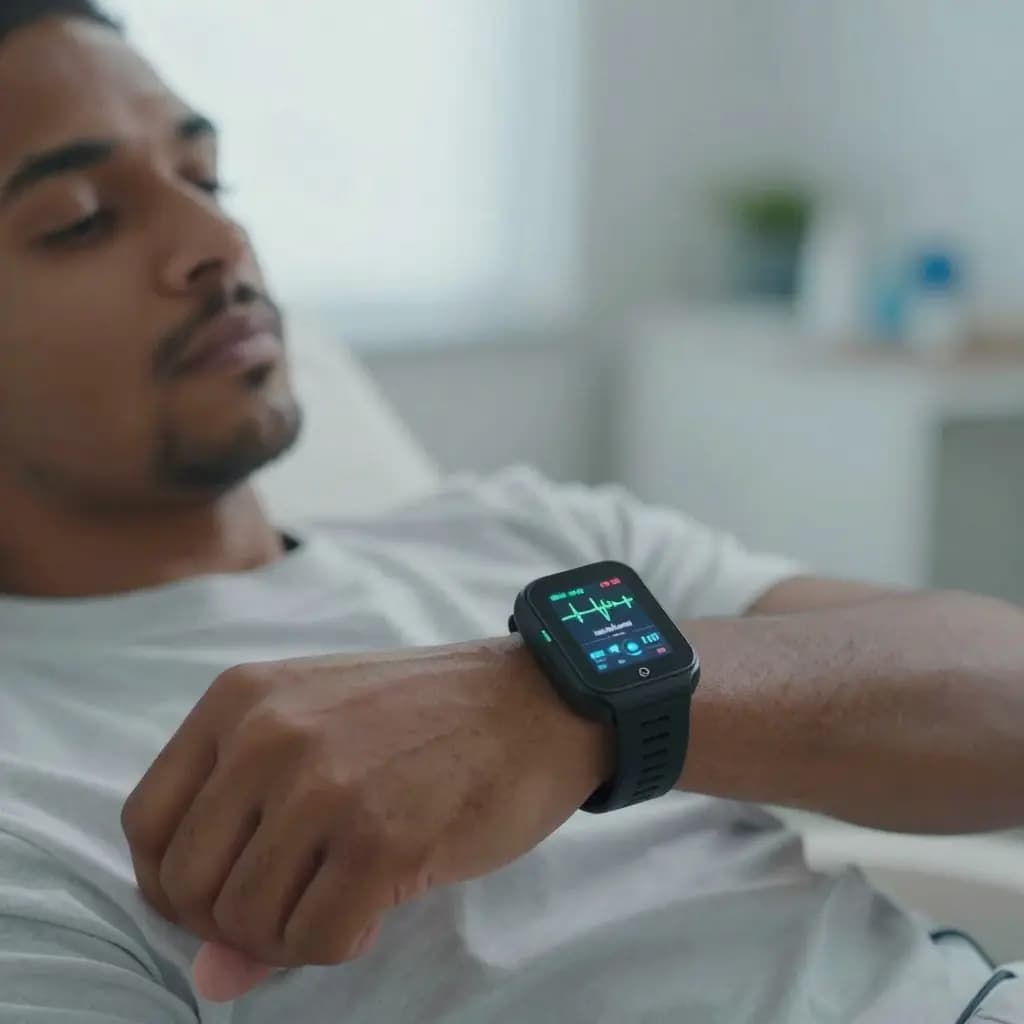
HRV Biofeedback for Nervous System Regulation: A Data-Driven Stress Management Approach
In an era where stress-related disorders continue to rise and traditional mental health interventions don't work for everyone, Heart Rate Variability (HRV) biofeedback represents a scientifically-backed breakthrough in autonomic nervous system regulation. This non-invasive technique uses real-time feedback to help your body recalibrate its stress response, offering measurable improvements in emotional health, anxiety, and chronic pain-often within weeks.
Understanding Heart Rate Variability and Autonomic Regulation
Your heart doesn't beat at a perfectly constant rhythm. The variation between heartbeats-measured in milliseconds-tells a powerful story about your nervous system's health. Heart Rate Variability (HRV) reflects the dynamic balance between two branches of your autonomic nervous system: the sympathetic (your "fight-or-flight" response) and the parasympathetic (your "rest-and-digest" mode).
When you're chronically stressed, anxious, or depressed, this natural rhythm becomes chaotic. Research shows that psychological alterations such as anxiety and depression impair the modulation of the autonomic nervous system and cause HRV to decrease significantly[1]. A healthy HRV indicates your nervous system can flexibly shift between activation and relaxation-a quality called autonomic flexibility.
The autonomic nervous system operates through specific frequency bands that scientists can measure. The High Frequency (HF) band, ranging from 0.15 to 0.4 Hz, is related to parasympathetic nervous system activity and the function of the vagus nerve-essentially your body's "calm-down" system[1]. The Low Frequency (LF) band, between 0.04 and 0.15 Hz, is influenced by the sympathetic nervous system and is associated with baroreflex function, which regulates blood pressure and heart rate[1].
Deep Dive
To dive deeper into this topic, read our comprehensive guide: The Complete Guide to Mental Health & Emotional Resilience
How HRV Biofeedback Works
HRV biofeedback is elegantly simple in concept but powerful in execution. The technique uses a chest sensor connected to an app that displays your heart rate variability in real time. Rather than simply observing this data passively, you learn to synchronize your breathing with your cardiovascular rhythms at your body's optimal resonance frequency[2]. This creates a feedback loop that strengthens the connection between your brain and body.
The mechanism works through several interconnected processes. First, there's a precise phase relationship between heart rate oscillations and breathing at specific frequencies, combined with phase relationships between heart rate and blood pressure oscillations[3]. Second, the baroreflex-a physiological system that regulates blood pressure-becomes activated and strengthened during HRV biofeedback training[3]. This is crucial because baroreflex strengthening represents the most scientifically supported mechanism explaining why HRV biofeedback works[3].
When you engage in slow resonance breathing (typically around 6 breaths per minute), you create optimal conditions for maximum stimulation to the baroreflex. Research has documented large increases in baroreflex gain during HRV biofeedback training-meaning the baroreflex operates more strongly and your cardiovascular system becomes more responsive and stable[3].
Clinical Evidence: What the Research Shows
The scientific validation for HRV biofeedback has grown substantially. In one landmark clinical trial published in the Journal of Affective Disorders, researchers from Murdoch University studied 73 Australian adults diagnosed with both PTSD and chronic pain-two notoriously difficult conditions to treat together. After just six weeks of HRV biofeedback training, participants showed a 24% reduction in PTSD symptoms and nearly 25% improvement in pain-related interference, while the control group showed no improvements[2].
Lead researcher Thea Chadwick emphasized the significance: "This is the first controlled trial to show that improving physiological self-regulation can concurrently reduce PTSD and chronic pain symptoms"[2]. The study demonstrates that HRV biofeedback works as a low-cost, accessible intervention that can complement existing therapies-particularly valuable for individuals who struggle with intensive psychological treatments.
For COVID-19 survivors and patients with chronic cardiovascular diseases, the benefits are equally compelling. When COVID-19 survivors with low HRV levels participated in HRV biofeedback training, they showed a marked improvement in autonomic function. The percentage of high frequencies increased across all phases of assessment, while low frequencies significantly decreased, indicating improved parasympathetic tone and reduced sympathetic hyperactivity[1].
Mechanisms: Why Your Brain and Body Respond
HRV biofeedback produces improvements through multiple biological pathways. The most established mechanism involves strengthening homeostasis in the baroreceptor system, which enhances your body's ability to self-regulate[3]. Recently, scientists have proposed that the technique also stimulates the vagal afferent pathway-nerve fibers that carry signals from your heart to your brain's frontal cortical areas, regions involved in emotion regulation and decision-making[3].
The vagus nerve plays a starring role in these improvements. When HRV biofeedback stimulates the vagus nerve and decreases sympathetic hyperactivity, it induces a higher level of relaxation that supports the modulation and control of inflammatory cell production and release[1]. This creates an increased anti-inflammatory status that benefits not just your cardiovascular system but multiple body systems[1].
Beyond the physiological mechanisms, HRV biofeedback incorporates a meditation-like effect. The technique requires paying close attention to nuances in breathing, which is very similar to mindfulness meditation exercises[3]. This pathway is primarily mental: you cannot simultaneously worry about your daily concerns while concentrating on relaxed breathing patterns[3].
Measurable Health Outcomes
The outcomes from HRV biofeedback are extensive and measurable. Research documents improvements in:
Practical Application: Implementing HRV Biofeedback in Daily Life
The beauty of HRV biofeedback is its accessibility and practical applicability. Here's how to integrate it into your daily stress management routine:
Getting Started with HRV Biofeedback
Obtain the right equipment: You'll need a chest sensor (typically a heart rate monitor or specialized HRV device) connected to a smartphone app that displays your heart rate variability in real time. Most devices cost between $50-300 and are widely available.
Learn your resonance frequency: Your optimal breathing rate is typically between 5-7 breaths per minute, though it may be slightly different for your unique physiology. Many apps help you identify this by showing you when your heart rate variability peaks.
Practice resonance breathing: Set aside 10-20 minutes daily for your initial training phase. Synchronize your breathing with the visual feedback from your app, aiming for slow, deep breaths that match the frequency that maximizes your HRV. You should see your heart rate variability pattern become more coherent and stable within minutes.
Daily Integration Strategy
Morning session: Start your day with 10-15 minutes of HRV biofeedback. This primes your nervous system for better emotional regulation throughout the day and establishes baseline autonomic flexibility.
Stress-triggered use: When you notice stress building-whether from work pressure, social anxiety, or emotional triggers-use HRV biofeedback as a real-time intervention. Even 5-10 minutes can interrupt the stress cascade and reset your nervous system.
Evening wind-down: Use HRV biofeedback during your evening routine to facilitate parasympathetic activation and improve sleep quality. This is particularly effective if you struggle with racing thoughts or anxiety at bedtime.
Optimizing Your Results
Consistency matters: Research shows that HRV biofeedback produces both short-term and long-term results, but consistency is essential. Aim for at least 3-5 sessions weekly, particularly during your initial 6-week training period when neuroplastic changes are most dramatic.
Track your progress: Most HRV apps provide historical data showing improvements in your HF/LF ratio and overall HRV scores. Watching these metrics improve provides powerful motivation and objective evidence of your nervous system's increasing flexibility.
Combine with other modalities: HRV biofeedback works synergistically with cognitive behavioral therapy, mindfulness meditation, exercise, and other stress-management techniques. Consider it a complement to your existing mental health practice, not a replacement for professional care when needed.
Special Populations and Conditions
HRV biofeedback shows particular promise for specific populations. COVID-19 survivors with autonomic disturbances and cardiovascular sequelae benefit from HRV biofeedback as part of multidisciplinary treatment[1]. Those struggling with PTSD and chronic pain show clinically significant improvements within six weeks[2]. Individuals with insomnia involving physiological hyperarousal demonstrate enhanced outcomes when HRV biofeedback is combined with cognitive behavioral therapy[4].
The Future of Nervous System Regulation
As we move further into 2026, HRV biofeedback represents a significant shift in how we approach stress management and mental health. Unlike pharmaceutical interventions with potential side effects, HRV biofeedback is non-invasive, accessible, and empowers you to actively participate in your own nervous system regulation.
The convergence of wearable technology, real-time biofeedback apps, and solid scientific evidence creates unprecedented opportunity for individuals to achieve genuine, measurable improvements in emotional and physical health. Whether you're managing anxiety, recovering from trauma, dealing with chronic pain, or simply seeking to optimize your stress resilience, HRV biofeedback offers a data-driven pathway to lasting nervous system balance.
The evidence is clear: your heart's rhythm holds the key to your nervous system's health, and HRV biofeedback provides the practical tool to turn that insight into transformative results.