
Gut Health 101: Understanding the Microbiome
There is an ecosystem living inside you right now - vast, complex, and largely invisible - that influences your mood, your immune system, your weight, your sleep, and your risk of developing chronic disease. It outnumbers your human cells by a factor of roughly ten to one. It has its own nervous system. Scientists are only beginning to understand how profoundly it shapes every dimension of your health.
It is your gut microbiome. And it is not an exaggeration to say that understanding it may be one of the most important things you can do for your long-term wellbeing.
Deep Dive
To dive deeper into this topic, read our comprehensive guide: The Ultimate Guide to Science-Backed Nutrition & Gut Health
What Is the Gut Microbiome?
Your gastrointestinal tract - from your mouth to your colon - is home to an estimated 38 trillion microorganisms, including bacteria, viruses, fungi, and archaea. This community of microorganisms, collectively called the gut microbiome, weighs approximately 1.5-2 kilograms - roughly the weight of your brain - and contains over 1,000 distinct bacterial species across the human population, with each individual hosting around 150-200 species at any given time.
This is not contamination. These microorganisms are not passengers. They are an integral part of your biology - so fundamental to human function that many researchers now classify the microbiome as a distinct organ in its own right.
The gut microbiome performs functions that the human body simply cannot perform alone:
- Synthesizing essential vitamins - including Vitamin K, B12, folate, and biotin - that your cells cannot manufacture
- Fermenting dietary fiber into short-chain fatty acids (SCFAs) - particularly butyrate, acetate, and propionate - that serve as the primary fuel for the cells lining your colon
- Regulating immune system development and ongoing immune responses
- Producing a significant proportion of the body's serotonin - the neurotransmitter most associated with mood, often called the "happiness chemical"
- Protecting against pathogenic organisms through competitive exclusion and direct antimicrobial production
Without a healthy, diverse microbiome, your biology is compromised at a fundamental level - and the downstream consequences reach far beyond your digestive tract.
The Gut-Immune Connection: Your Immune System Lives Here
If you have ever wondered why digestive health and immune function seem so deeply linked - why a course of antibiotics leaves you vulnerable to infections, or why gut inflammation is associated with autoimmune conditions - the answer lies in a remarkable anatomical fact: approximately 70-80% of your entire immune system resides in and around the gut.
The intestinal lining is the largest surface area of your body in contact with the external environment - significantly larger than your skin. Every day, your gut must distinguish between the trillions of beneficial microorganisms that belong there, the nutrients that need to be absorbed, and the genuine pathogens that need to be destroyed. This constant immune surveillance and decision-making is managed by the gut-associated lymphoid tissue (GALT) - and it depends entirely on a healthy, balanced microbiome to function correctly.
Research published in 2025 on the NIH's PubMed database confirms that gut microbes send signals to the immune system through multiple molecular pathways, producing substances that reduce inflammation and regulate immune cell behavior. When this signaling is disrupted - a state called dysbiosis - the immune system loses its calibration, becoming either underactive (increasing infection susceptibility) or overactive (driving autoimmune and inflammatory conditions).
The implications extend even to bone health. Groundbreaking 2025 research from AIIMS (All India Institute of Medical Sciences) found that gut bacteria directly influence immune cells responsible for bone preservation - and that Lactobacillus acidophilus supplementation restored immune balance and reduced bone resorption in postmenopausal women, via butyrate-mediated immune regulation. The gut, it turns out, is not just a digestive organ. It is a systemic immune command center.
The Gut-Brain Axis: Your Second Brain Is Real
The concept of the "second brain" is no longer a metaphor. Your gut contains approximately 500 million neurons - more than the spinal cord - forming the enteric nervous system (ENS), which operates independently of the brain and communicates with it bidirectionally through the vagus nerve.
This gut-brain axis - the biochemical signaling highway between your digestive system and your central nervous system - is now one of the most actively researched areas in neuroscience and psychiatry. The latest 2025 research is moving beyond correlation to identify the precise molecular and neurological pathways through which gut microbes influence mood, stress response, and cognitive function.
Approximately 90-95% of the body's serotonin is produced in the gut - not the brain - largely through the activity of specific bacterial species that stimulate enterochromaffin cells in the intestinal lining. Disruptions in gut microbial composition measurably alter serotonin availability, which has profound implications for mood regulation, anxiety, and depression.
The practical implication: when you eat for your gut, you are also eating for your brain.
What Disrupts the Microbiome?
Modern life is systematically hostile to microbiome diversity and balance. The most significant disruptors include:
Antibiotic overuse: Antibiotics are life-saving when genuinely necessary - but they are pharmacologically indiscriminate, destroying beneficial bacteria alongside pathogenic ones. A single course of broad-spectrum antibiotics can reduce microbiome diversity by up to 30%, with recovery taking months to years and some species never fully returning.
Ultra-processed food: Highly processed foods are typically low in fiber (the primary food source for beneficial bacteria), high in refined sugar (which feeds pathogenic species), and rich in emulsifiers and artificial additives that research increasingly links to disruption of the intestinal mucus layer - the physical barrier between the microbial world of the gut and the body's interior.
Chronic stress: The gut-brain axis is bidirectional - just as gut health affects the brain, chronic psychological stress measurably alters gut microbial composition, reduces barrier integrity (contributing to "leaky gut"), and suppresses the diversity that characterizes a healthy microbiome.
Sleep deprivation: Emerging 2025 research confirms that sleep quality significantly modulates gut microbiome composition. The gut microbiome has its own circadian rhythm - disrupting sleep disrupts microbial populations in ways that affect metabolism and immune function.
Sedentary behavior: Physical activity is associated with greater microbiome diversity - one of the most consistent markers of gut health across populations. Regular exercise appears to independently increase the abundance of butyrate-producing bacteria.
How to Nurture Your Microbiome: Evidence-Based Strategies
Feed Your Bacteria Before You Feed Yourself
The single most impactful thing you can do for your microbiome is increase dietary fiber diversity - specifically prebiotic fiber, which serves as food for beneficial bacteria. Research published in Nature found that individuals consuming 30 or more different plant foods per week had significantly greater microbiome diversity than those consuming fewer than 10. The goal is not to eat more of the same vegetables - it is variety.
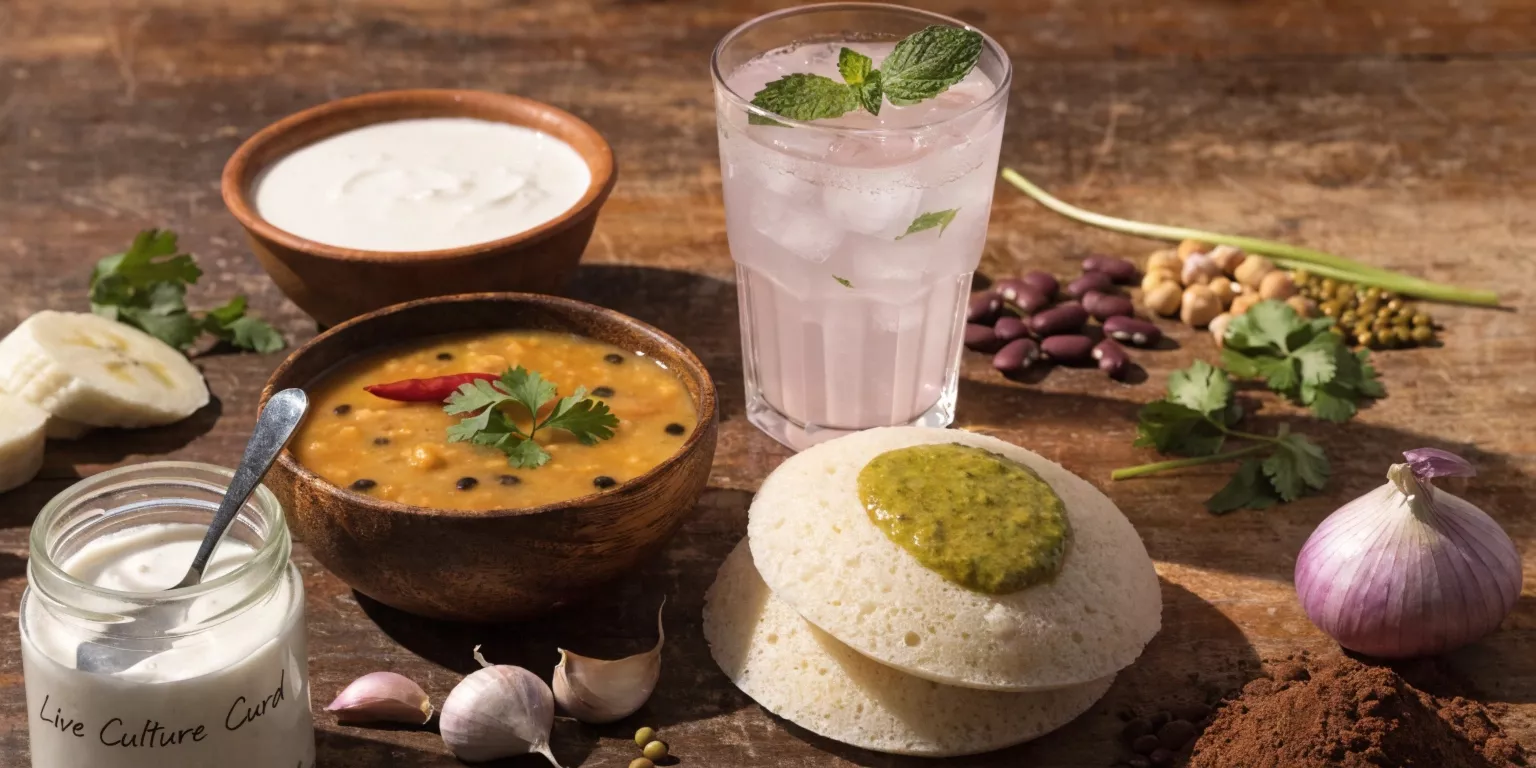
Excellent prebiotic fiber sources accessible in the Indian diet:
- Dal and legumes (lentils, chickpeas, rajma): Rich in resistant starch and soluble fiber - among the most potent prebiotic foods available
- Onion and garlic: High in inulin and fructooligosaccharides - direct food for Bifidobacterium and Lactobacillus species
- Raw banana and cooked-and-cooled rice: Resistant starch content increases when these are cooked and cooled
- Whole grains and millets: Ragi, jowar, bajra - traditional Indian grains with exceptional fiber profiles
Introduce Fermented Foods Daily
Fermented foods deliver live beneficial microorganisms directly to the gut - a direct microbiome inoculation with every serving. A landmark 2021 study from Stanford University found that a diet high in fermented foods significantly increased microbiome diversity and reduced inflammatory markers compared to a high-fiber diet alone - a finding that elevated fermented foods from traditional wisdom to clinical evidence.
Fermented foods deeply embedded in Indian food culture that directly support the microbiome:
- Curd (dahi): Contains live Lactobacillus cultures - consume fresh, not heat-treated
- Idli and dosa batter: The fermentation process produces beneficial lactic acid bacteria
- Kanji (fermented carrot/beetroot drink): A traditional North Indian probiotic beverage
- Lassi: Provides both probiotics (from curd) and prebiotic fiber when made with whole fruit
Consider Targeted Probiotic Supplementation
While whole food sources are always preferable as a foundation, targeted probiotic supplementation has a growing evidence base for specific conditions. New clinical trials from 2025 confirm that specific probiotic strains produce measurable health outcomes - but strain specificity matters enormously. Lactobacillus acidophilus and Bifidobacterium longum have the strongest clinical evidence across digestive health, immune modulation, and mood support.
When choosing a probiotic supplement:
- Look for a minimum 10 billion CFU per dose
- Choose products with multiple strains rather than single-strain formulations
- Ensure the product guarantees live cultures at expiry, not at manufacture
- Store according to instructions - most require refrigeration
Minimize Unnecessary Antibiotic Exposure
This does not mean refusing antibiotics when medically necessary - it means having an informed conversation with your prescribing physician about whether antibiotics are genuinely indicated for your specific condition. Viral infections (the common cold, most sore throats, most respiratory infections) do not respond to antibiotics - yet they account for a significant proportion of antibiotic prescriptions globally. Each unnecessary course imposes a real and lasting cost on your microbiome.
When antibiotics are genuinely necessary:
- Take a high-quality probiotic supplement 2 hours after each antibiotic dose (not simultaneously - the antibiotic will kill the probiotic)
- Continue probiotic supplementation for 4-6 weeks after completing the antibiotic course
- Significantly increase prebiotic fiber intake during and after treatment to support microbial recovery
The Future of Gut Health Science
The microbiome field is moving faster than perhaps any other area of medicine. Research published in Gut BMJ in 2025 highlights how AI-powered microbiome analysis is enabling precision medicine approaches - predicting individual responses to dietary interventions, medications, and probiotics based on personal microbial fingerprints. The era of personalized gut health - where dietary recommendations are tailored to your specific microbial composition - is already beginning.
Emerging therapeutic frontiers include phage therapy (using viruses that specifically target harmful bacteria without disrupting beneficial species), next-generation probiotics engineered for specific health outcomes, and fecal microbiota transplantation (FMT) - now with regulatory approval in the US and UK for C. difficile infection and being studied for conditions from IBD to Parkinson's disease.
Your gut microbiome is not a peripheral consideration in your health - it is a central one. It connects your diet to your immunity, your brain chemistry to your emotional state, your sleep to your metabolism, your aging process to your disease risk. Tending to it is not a wellness trend. It is foundational biology.
Feed it diversity. Protect it from unnecessary disruption. And recognize that every meal is, in a very literal sense, a conversation with the trillions of organisms that keep you well.